
Connecting Through Personal Sharing in Christian Community
Devotional
Sermon Summary
Bible Study Guide
Sermon Clips
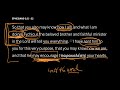
so that you may know how i am what my affairs are my circumstances and what i am doing what kinds of things i'm doing and how i'm doing them tychicus the beloved brother and faithful minister in the lord will tell you everything so evidently tychicus is is going to carry this letter and uh give personal greetings to them and talk to them about paul's situation [00:56:39]
i have sent him to you for this very purpose that you may know how we are it says it again may know how i am may know how we are and then he adds and that he may encourage your hearts so father as we ponder these almost closing words grant us to understand how the knowledge that we have of how other christians are doing and what their lives are like and how we might be involved is relevant to the way we live the christian life [01:26:96]
he asks for prayer and he asks for prayer that they would engage in supplication not only for all the saints but for him and then he gives him this specific detail about his life i am an ambassador in chains so he believes that knowing particular things about him will enable them to pray for him more personally more effectively that's the first reason why it matters for tychic is to tell the church all about what paul is doing [02:02:72]
here's a second reason that he doesn't just say how i am or what my affairs are but what i'm doing the doings of paul are precisely designed to be a model for learning from the churches look at this passage in first corinthians 4 to the present hour we hunger and thirst we're poorly dressed we're buffeted and homeless we labor working with our own hands these are things he's doing right [02:12:87]
when reviled we bless when persecuted we endure when slandered we entreat we have become and are still like the scum of the world the refuse of all things i urge you then be imitators of me that's the reason they need to know because paul lives his life precisely with a view for christians to imitate him that's why i sent timothy not not tychicus this time but the same dynamic right [02:48:64]
so he wants them to know of his imprisonment and his sufferings because those sufferings are being endured precisely for their glory and knowing about it would make a difference evidently look what he says in colossians 1 24 about his sufferings now i rejoice in my sufferings for your sake i rejoice in my sufferings for your sake and in my flesh i am filling up what is lacking in christ's afflictions [03:36:56]
when i suffer the church is able to see something of the love of christ because i'm suffering for your sake and so i'm completing the sufferings of christ by offering them to you in my own body so the first thing we see in this text is that there are three reasons at least for why tychicus is being sent by paul to tell them all about his his affairs and his doings so that they pray for him [04:01:84]
and then the last thing to observe i think is to notice that he's sending tychicus to encourage their hearts now here's what seems really interesting to me about this and it may be so obvious to you that i don't need to point it out but i'll do it anyway in ephesians 4 1 paul says i therefore a prisoner of the lord encourage or urge same word as here he sent tychicus to encourage their hearts [04:47:19]
paul is saying i am writing i therefore a prisoner of the lord encourage you to walk in a manner worthy of the calling to which you've been called in other words paul sees his letter as encouragement which simply raises the question okay if paul is an inspired spokesman of the risen christ and he is sending a letter inspired by the living god six chapters long full of encouragement for how they are to walk and believe and love and relate to the lord and relate to each other [04:89:59]
christ gives teachers of the word he doesn't just give the word right he wrote letters paul wrote letters inspired by the living christ and then christ deems it fitting and right and helpful and good that there be teachers in the church shepherds in the church to take the word and embody it so he's i have sent him he's going to be there you can see him you can hear out of his own mouth the reading of this letter [05:66:08]
you can hear his tone of voice you can you can hear his passions you can hear his love and that really matters doesn't it christ has ordained that the spirit ministered to the church that the word minister to the church and that tychicus types teachers emissaries missionaries pastors fellow christians encourage each other with the word not instead of the word and not the word without them [06:07:27]
so all of that to show how he wants them to know his situation and he wants tychicus to embody his message all of which tells us the horizontal dimension the camaraderie dimension of the christian life and the upbuilding of each other in faith is essential [06:54:88]
Chatbot

-
I'm an AI bot trained specifically on the sermon from May 14, 2022. Do you have any questions about it?