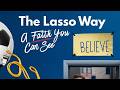
James begins with scattered Jewish Christians who are living through real hardship, not abstract theology. The letter comes to people who have lost security, who know economic pressure, political uncertainty, displacement, fear, and the ache of trying to stay faithful when life is hard. James does not start by explaining salvation the way Paul often does. James asks the coach question: what is faith going to look like when people can actually see it?
James says, “count it all joy,” and that line sounds wrong if joy means smiling through pain. Joy is not pretending everything is okay. Joy is trusting that suffering does not get the final word. Scripture is too honest about pain to ask for fake happiness. The Psalms cry, Job argues, Jesus weeps, and Jesus even asks why from the cross.
James does not glorify trials. Cancer is not good, war is not good, depression is not good, injustice is not good. James says that when trials come, because they do come, God is still capable of working for good. God is still in the business of resurrection. God does not cause suffering as some ridiculous “strongest generals” test, but God meets people in the middle of the mess and calls them to endure.
The Ted Lasso picture gives a plain way to see that kind of hope. Ted is hurt, lonely, anxious, and falling apart, and at first he tries to keep smiling. His honesty matters because faith is not pretending. Faith begins with telling the truth: “I’m not okay and I need some help.”
James sounds like a coach in the locker room at halftime. He blows the whistle and says, “Come on. This is what it is, y’all.” The question is not whether suffering will arrive. The question is what can hold steady when it does. Bitterness can form a person, but so can compassion, wisdom, and love if there is still a crack where light can come in.
Hope is not anchored in human strength. Hope is anchored in God’s faithfulness. Faith is not perfect certainty either. Faith is choosing the path of love while questions remain. Honest doubt is not the enemy of faith. Divided loyalty, indifference, and refusal to take the next faithful step are the deeper danger.
The empty tomb becomes the church’s real “believe” sign. Christians gather because resurrection keeps interrupting despair. James asks whether faith shows up in action, speech, treatment of the poor, conflict, and wisdom. Jesus Christ asks people to follow, and James calls them to keep moving, together, in the light of resurrection.
##
Key Takeaways
- 1. Joy refuses denial and despair Joy does not ask a wounded person to act cheerful while pain is still raw. Joy names a deeper trust that grief, trauma, fear, and loss are not the final authority over a life held by God. The faithful heart can mourn honestly and still remain tethered to the God who keeps resurrection stronger than the present circumstance. [23:32]
- 2. God does not weaponize suffering Suffering should not be explained as God handing out battles to prove spiritual strength. That kind of theology distorts the character of God and leaves shame where comfort should be. James calls for endurance in the middle of life’s good and bad realities, not belief in a God who harms children or crushes people for a lesson. [31:29]
- 3. Faith begins with honest need Faith is not performance happiness or a forced smile over panic, loneliness, or grief. Ted Lasso’s courage appears when the mask breaks and help becomes necessary. The life of faith has room for the sentence, “I’m not okay,” because truthfulness opens the door to healing, community, and wisdom. [26:52]
- 4. Hope is worth the risk Hope does not depend on every circumstance turning out the desired way. Hope rests in the faithfulness of God, who keeps making dead ends into places where new life can interrupt despair. The empty tomb teaches that hope is not wishful thinking, but a stubborn trust in who God is. [46:48]
- 5. Questions need not destroy faith James is not shaming honest doubt, because Scripture is full of faithful people who question, wrestle, and cry out. The deeper danger is divided loyalty, trying to walk the way of love while clinging to fear, selfishness, or refusal. Faith can still take the next loving step while certainty remains unfinished.
## [43:25]
Youtube Chapters
- [00:00] - Welcome
- [11:37] - Introducing Ted Lasso and James
- [15:16] - James Asks What Faith Does
- [17:14] - James the Just
- [19:19] - Scattered Christians Under Pressure
- [20:18] - Count It All Joy
- [23:32] - Joy Is Not Pretending
- [27:15] - Trials, Testing, and Endurance
- [33:33] - Coach James in the Locker Room
- [37:53] - Believe, Hope, and Ted Lasso
- [42:11] - Wisdom Instead of Easy Answers
- [47:10] - The Empty Tomb Interrupts Despair
- [50:16] - Faith People Can See
- [52:02] - Prayer and Communion Response