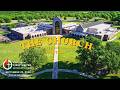
The church is more than a building, but it is not less than a place where people have been baptized, married, fed at the Lord’s table, and taught to trust God. The memories attached to a sanctuary, a Sunday school room, or a worn-out playground remind believers that brick and mortar can carry the weight of love, calling, grief, and grace. The church’s spaces matter because the people, Scriptures, prayers, communion, and baptisms within them make a people a people.
Paul’s images in 1 Corinthians 3 hold together the human work and God’s work. God’s field needs planting and watering, but God alone gives the growth. The body of Christ needs every part, because the choir cannot say to the youth, “I have no need of you,” and one ministry cannot dismiss another as unnecessary. The church belongs to God before it belongs to any one group, preference, or personality.
John Wesley’s warning against a party spirit presses against the pride that says one camp has the exclusive corner on the truth. The catholic spirit, with a little c, names the unity of Christ’s church across time and place. The local church becomes the actual doorway into that larger body. Social holiness means that no disciple gets to be a lone ranger. Christ puts disciples in community by purpose and design.
The church’s calling includes raising up leaders from within its own life. The Holy Spirit still calls people, but churches must learn again how to flush them out, call them out, and send them out. The next associate, missionary, teacher, or pastor may be only a conversation or two away from saying yes to God’s work.
The image of a circle gives the church a clear shape. A circle turned only inward can become closed and hard to enter. A circle turned only outward can lose the deep relationships that hold people together. The church becomes most fully itself when it is tightly connected, Christ-centered, able to see one another, and still has a free hand extended toward neighbors.
Living stones need mortar. Prayers, presence, gifts, service, and witness bind believers together for both the internal life of the church and the outward work of changing lives one neighbor at a time. The church’s long legacy of buildings, mission partnerships, new congregations, and care for neighbors points toward a future where Christ remains the strong center and the world remains within reach.
Key Takeaways
- 1. God alone gives the growth. God’s field requires real human labor, including planting, watering, serving, and showing up. God’s growth, however, cannot be manufactured by effort, talent, or institutional strength. The church becomes healthier when its members work faithfully without pretending that the life comes from them. [1:01:19]
- 2. No disciple follows Jesus alone. Social holiness means more than doing good things in public. Christ forms disciples through a people who know, correct, encourage, and serve one another. Lone ranger Christianity may preserve independence, but it cannot bear the full shape of life in the body of Christ. [1:04:54]
- 3. Unity refuses the party spirit. Paul confronts the pride that turns spiritual preferences into spiritual superiority. The catholic spirit does not erase differences, but it refuses to make differences the foundation. Christ, not a favored leader, style, or group, remains the foundation of the church. [1:02:24]
- 4. Living stones need faithful mortar. Prayers, presence, gifts, service, and witness are not membership formalities. These practices hold a local church together and make its love visible beyond its walls. The church’s shared commitments become the mortar that gives living stones a durable place in God’s work. [1:10:54]
- 5. Christ-centered circles reach outward. The church must see one another clearly and remain open-handed toward neighbors. A strong center in Christ keeps relationships from becoming merely social, while an extended hand keeps fellowship from becoming self-protective. The church changes lives when belonging and mission remain joined together. [1:09:07]
Youtube Chapters