Where do you run when the waves rise? Egypt teaches us that money, people, and self-reliance cannot shield us from the deeper storm—the storm of sin and judgment. Israel cried out from bondage, and God heard. He sent Moses, and after nine plagues exposed Egypt’s gods as empty, the final judgment fell: the death of every firstborn. God’s justice was not random; it was personal and holy. “Israel is my firstborn son,” He declared, and the warning was clear—refuse to release My son, and I will take yours. Sin leads somewhere. The wages of sin is death.
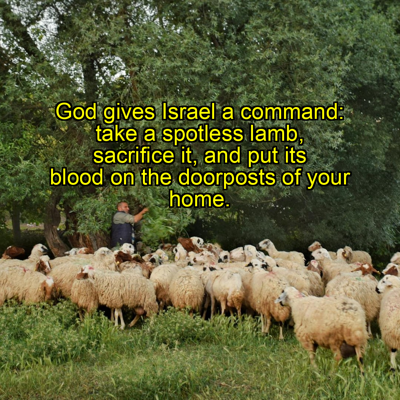
Into that night of judgment, God opened a door of mercy. He told His people to take a spotless lamb, kill it, and mark their doors with its blood. “When I see the blood, I will pass over you.” Death moved through the streets, but in the homes under the blood, there was peace. Israel was not spared because they were better; they were spared because a substitute died. God commanded them to remember this deliverance every year—not only to look back—but to look ahead to a Savior.
Jesus is that Savior. He is the Firstborn who died in our place, the spotless Lamb without blemish, the blood that shields us from wrath, and the Deliverer greater than Moses. On Passover night with His disciples, Jesus took bread and cup and said, “This is my body… This cup is the new covenant in my blood.” The first Passover gave life for a moment; Jesus gives eternal life through His blood. In Him, judgment passes over, not because we are worthy, but because He is.
God did not merely get Israel out of Egypt; He brought them to Himself. They were freed to worship and to walk in obedience. The tabernacle, the altar, the priesthood—all of it pointed forward to Christ, who tabernacled among us. We still face wildernesses, but we do not walk unprotected. We live under blood that still speaks better things. So we keep the feast with sincerity and truth. We live as people redeemed. And when accusation, guilt, or fear draw near, we remember: the blood has been applied.
Key Takeaways
- 1. Judgment is personal, justice is holy. God’s judgment is not abstract karma but the measured response of a holy God who knows names and histories. That should sober us and strip away any casual posture toward sin. But it also comforts us—evil is seen and will be addressed. The cross shows both realities at once: justice upheld, mercy opened.
- 2. Covered by blood, not merit. Israel’s safety that night had nothing to do with moral superiority; it hung on the lamb’s blood alone. The same is true today—our assurance rests outside of us, in Christ’s finished work. This frees us from the exhausting cycle of self-justification. Faith clings to what God sees—the blood—and finds rest.
- 3. Saved for worshipful obedience. Deliverance is not an exit only; it is an entrance into God’s presence and ways. Freedom without formation becomes another kind of bondage. God brings us out to bring us in—into holiness, into habits that align our loves with His. Obedience becomes the shape that gratitude takes.
- 4. Remembering redemption forms identity. Passover was a yearly rehearsal that told Israel who they were: a rescued people. Christian remembrance—Word, Table, prayer—does the same work in us. Memory trains desire and directs hope; we become what we rehearse. Regularly returning to the story of the Lamb steadies us in the wilderness.
- 5. The blood silences accusation. The enemy traffics in half-true indictments that magnify our failure and minimize Christ’s sufficiency. Answer him with what God sees: the blood of Jesus applied to your life. This is not denial of sin but confidence in atonement. Let the louder word over your past be the Lamb’s.