God’s holiness is not casual, and neither is His welcome. On our own, we cannot set the terms for coming close, yet we are not left outside the door. Jesus, the sinless and compassionate High Priest, has opened the way and invites you to come with humility and hope. Lay down self-reliance and hurry, and let reverence steady your heart. In Jesus, awe and assurance meet, and you are received. Step toward God today, not with fear, but with faith that has been made possible by His mercy.[02:11]
Hebrews 4:14–16: Since we have a great High Priest—Jesus, God’s Son—who has gone into heaven itself, let us hold firmly to our trust. He understands our weakness, having faced testing in every way, yet without sin. So let us approach the throne called grace with confidence, to receive the mercy and timely help we need. (Hebrews 4:14–16)
Reflection: Where have you been approaching God on your own terms, and what simple habit this week could help you come with both reverence and confidence (for example, a brief prayer of humility before you speak)?
The blood on the mercy seat pointed ahead to a better offering—Christ’s own life poured out. His sacrifice does not temporarily cover sin; it reaches the deepest places and settles God’s righteous verdict once and for all. Because Jesus satisfied justice, you don’t have to live in fear of payback; you can live in the freedom of being washed. Bring your specific sins into the light and receive a specific cleansing. Let the finished work of Christ quiet the accusing voice and steady your steps in grace.[03:45]
Hebrews 9:12–14: Christ entered the holiest place once for all, not with the blood of animals, but with His own, securing an eternal rescue. If the old rituals could make people outwardly clean, how much more will His blood cleanse our consciences from lifeless deeds so we can serve the living God. (Hebrews 9:12–14)
Reflection: When a wave of guilt hits this week, what concrete practice will you use to receive Christ’s cleansing in that moment (for example, confessing aloud and thanking Him for His finished work)?
On the Day of Atonement, the scapegoat bore the confessed sins of the people and was led into a land from which it would not return. In Jesus, that picture becomes your reality: forgiven and also released, not just pardoned but unburdened. You are not meant to drag what He has already carried out of sight. Name what clings to your heart, and then let His finished work send it into the wilderness. Walk in the relief of sins removed, not just covered.[04:22]
Leviticus 16:21–22: The high priest places both hands on the live goat, confesses over it all the people’s wrongs, and lays those sins upon it. The goat is led into a remote wilderness, bearing their iniquities away into a desolate place. (Leviticus 16:21–22)
Reflection: What is one specific regret you keep revisiting, and what small, tangible act could help you release it to Christ this week (for example, writing it down and discarding it in prayer)?
Because Jesus opened a new and living way, you are invited into God’s presence without fear of rejection. The curtain that once warned “keep out” now whispers “come in.” Draw near with a sincere heart, trusting that your record is sprinkled clean and your life is welcomed. Bring real needs, pray real prayers, and expect real grace. Let confidence rise, not from your performance, but from His pierced and living presence.[05:07]
Hebrews 10:19–22: Since we have confidence to enter the holiest place by Jesus’ blood, and since He has opened a living way through the curtain, and since He is our great priest, let us approach God with true hearts and full assurance. Our hearts have been cleansed from a guilty conscience, and our bodies washed for worship. (Hebrews 10:19–22)
Reflection: What is one concrete request you will bring boldly to God this week, and when will you set aside time to come before Him with full assurance?
Atonement leads to a new rhythm—resting in grace, practicing repentance, and walking in mercy. In Christ, the once-a-year cleansing becomes a daily welcome, and Sabbath becomes a lifestyle of trust. Let self-justifying effort give way to quiet reliance; let shame give way to gratitude. As you rest in being covered, extend the same mercy to others, becoming a living sign of the cross. Live clean, walk free, and point to the One who says, “You are covered.”[03:03]
Leviticus 16:29–31: On the tenth day of the seventh month, set aside all work and humble yourselves; on that day atonement is made to cleanse you, and you will be clean before the Lord. It is a day of complete rest, a lasting practice among God’s people. (Leviticus 16:29–31)
Reflection: What weekly rhythm of rest and repentance will you adopt to remember you are covered (for example, a simple Sabbath meal or a brief examen each evening)?
Have you ever had someone say, “I’ve got you covered,” right when you couldn’t carry one more thing? That’s the picture Leviticus 16 gives us—only the stakes are infinitely higher. A holy God dwells in the midst of a sinful people, and no one comes near on their own terms. Aaron, the high priest, enters God’s presence only once a year, only in humility, and only by blood. Even he must be cleansed before he can intercede for others. The Day of Atonement shows us that mercy is not casual; it is costly. And it points forward to Jesus.
Two goats stand at the center: one is sacrificed, the other is sent away. The first speaks of propitiation—God’s righteous anger against sin is satisfied as blood is sprinkled on the mercy seat. The second speaks of expiation—sins are confessed over the scapegoat and carried far into the wilderness, never to return. But the blood of animals was only a shadow. Jesus steps in as the greater High Priest, the better sacrifice, and the true scapegoat. He enters not an earthly tent but heaven itself, not with the blood of goats and calves but with His own blood, once for all.
This means more than momentary relief; it means permanent welcome. In Christ, we don’t negotiate access to God—we receive it. We don’t manage guilt—we release it because Jesus has carried it away. We don’t come flippantly—we come boldly, because the One who knows our weakness has already stood in our place. The cross answers both sides of our need: God’s justice is upheld, and our shame is removed.
So we worship without bulls or goats. We come to the cross, remember the Lamb, and live under the mercy that says, “You are covered.” If you’re tired of carrying what you cannot fix, hear this: Jesus has already made the way. Draw near with a true heart. Let the finished work of Christ shape how you pray, how you repent, and how you walk in freedom.
Maybe it was a bill you couldn’t pay, a deadline you couldn’t meet, or a burden you couldn’t carry. In that moment, someone stepped in to help finish what you could not.
While Leviticus is difficult to read—with its rituals, laws, and sacrifices—it reveals that God is holy, we are sinful, and God has made a way for our sins to be covered through a perfect sacrifice.
Aaron could not approach God casually or carelessly. He had to follow every instruction with precision because he was stepping into the presence of a holy God.
We can never come to God on our own terms. But praise God—we don’t need a sinful human priest anymore. Jesus, our sinless High Priest, entered heaven’s sanctuary once and for all, making a way for us to draw near.
The blood of Jesus doesn’t just cover your sin for a moment—it cleanses your heart forever. His sacrifice satisfies God's justice and opens the door for grace.
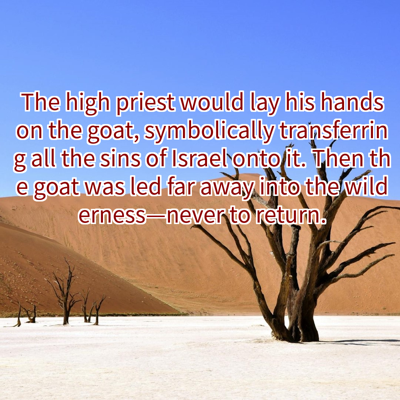
The high priest would lay his hands on the goat, symbolically transferring all the sins of Israel onto it. Then the goat was led far away into the wilderness—never to return.
If you’re in Christ, your sin isn’t just forgiven—it’s gone. It has been carried away. Don’t carry what Jesus already took.
Jesus is the greater High Priest who doesn’t need to offer sacrifices for Himself; he’s the better sacrifice, not with the blood of goats but with his own precious blood.
Add this chatbot onto your site with the embed code below
<iframe frameborder="0" src="https://pastors.ai/sermonWidget/sermon/christ-atoning-sacrifice" width="100%" height="100%" style="height:100vh;"></iframe>Copy