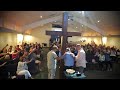
Chatham and Springfield displayed persistent compassion after tragedy, sustaining vigils, fundraisers, and a community memorial that became a model for others. Prayer and consistent action moved from grief into tangible care as neighbors kept returning to support families and to remember together. A mission cross served as a traveling symbol of presence, drawing first responders and residents to shared moments of prayer along flood-swollen rivers and at memorial sites. At Camp Mystic, what looked impossible became providential: procurement of costly cedar, skilled carpentry, and community resources converged quickly, signaling a sequence of answers to focused prayer and urgent need.
The cross moved beyond symbol to anchor. Communities landscaped and reinforced memorial sites so that the marker could withstand future storms, and small tokens painted by a child multiplied the reach of consolation. Trips to multiple tragedies, including Shreveport, demonstrated how a visible, steady sign of hope can create space for grief, confession, and new commitments. In Phoenix after a national assassination, an impromptu vigil expanded into days of open mic testimony, public worship, and institutional coordination, where the cross became both a focal point for mourning and a catalyst for revival.
Logistics and security often blocked access, yet persistence and creativity opened doors: local workers, unexpected donations, and willing volunteers moved obstacles. The cross entered spaces where leaders decided where it should and should not go, and a moment of bold action transformed a hidden symbol into a visible lampstand before a global audience. Sending and being sent formed a theological rhythm: some equip from home, others carry into the field; both roles matter equally in bringing physical presence and spiritual witness. The narrative insists that steady prayer, communal commitment, and readiness to act together bring tangible outcomes that heal, remember, and point toward the cross as the source of ultimate reconciliation.
Key Takeaways
- 1. Community sustains long-term healing Communities that return repeatedly to grief shift memory into stewardship rather than forgetting. Regular practices—vigils, memorial landscaping, and public support—create social structures that hold loss without letting it ossify into bitterness. Consistent presence trains neighbors to practice patience and resilience, allowing grief to be integrated into life. [33:35]
- 2. Prayer opens impossible doors Focused prayer often coincided with concrete provision, where tools, wood, and skilled labor appeared when none seemed available. Prayer functioned not as passive hope but as a mobilizing force that directed attention and resources toward urgent needs. Expectant prayer also reshapes perception, enabling people to notice opportunities others would dismiss. [43:40]
- 3. The cross anchors communal memory A visible cross at a sacred site organizes mourning into a place of pilgrimage and ongoing care, inviting continual gestures of remembrance. Physical markers invite ritual that sustains mourning, offers a locus for intercession, and resists cultural amnesia. Small acts around that anchor—flowers, toys, painted crosses—translate private sorrow into shared testimony. [51:32]
- 4. Public grief can birth revival When grief becomes public, it can catalyze confession, testimony, and large-scale spiritual movements rather than simply private sorrow. Open mics, praying crowds, and unexpected gatherings convert numbness into vocations of care and witness. Public lament holds the potential to reorient hearts toward justice, hope, and communal conversion. [75:47]
Youtube Chapters
- [00:00] - Welcome
- [31:49] - Gratitude and Chatham testimony
- [34:33] - Arrival at Camp Mystic
- [42:21] - Miraculous provision of lumber
- [47:22] - Cross built and installed
- [51:32] - Community memorial and upkeep
- [57:21] - Missions: Shreveport and beyond
- [60:54] - Turning Point vigil begins
- [69:52] - Open mic and citywide response
- [76:21] - Stadium cross entry and extraction
- [84:53] - Reflection on being a lampstand
- [85:20] - Closing and gratitude