Sep 22, 2026
Moses led his flock to the far side of the wilderness. He saw a bush on fire. The flames did not consume it. Moses turned aside to look at this great sight. When the Lord saw that Moses turned aside, God called to him from the bush. He said, "Moses, Moses!" Moses replied, "Here I am." God told him to remove his sandals for he stood on holy ground.
God sees your situation before you ever see His call. He observed Moses' curiosity. He hears the cries of His people in their distress. God knew the suffering of Israel in Egypt. He was not distant or unaware. His plan to deliver them was already in motion, and He chose to involve Moses in that plan.
You may feel your current routine is far from holy. You are simply tending your flock, doing your daily work. Yet God sees your ordinary moments. He can interrupt your routine with a divine purpose. What ordinary task are you doing today where God might be waiting to get your attention?
Now Moses was keeping the flock of his father-in-law, Jethro, the priest of Midian, and he led his flock to the west side of the wilderness and came to Horeb, the mountain of God. And the angel of the Lord appeared to him in a flame of fire out of the midst of a bush. He looked, and behold, the bush was burning, yet it was not consumed. And Moses said, “I will turn aside to see this great sight, why the bush is not burned.” When the Lord saw that he turned aside to see, God called to him out of the bush, “Moses, Moses!” And he said, “Here I am.”
(Exodus 3:1–4, ESV)
Prayer: Ask God to open your eyes to see where He is at work in your ordinary day.
Challenge: Identify one routine task today and pause for 30 seconds to ask God to reveal His presence in it.
The Israelites groaned under their slavery. They cried out for rescue. Their cry for help rose up to God. God heard their groaning. God remembered His covenant with Abraham, Isaac, and Jacob. God saw the people of Israel. And God knew their need intimately.
These four actions form the foundation of God's call. His initiative always precedes our awareness. He is not a passive observer. He is an active listener and a faithful rememberer of His promises. His knowledge of your pain is complete. Your struggle has not escaped His notice.
You may be in a season of crying out. You may feel your prayers hit the ceiling. Hear this truth: God hears you. He remembers His promises to you. He sees your exact circumstance. He knows your deepest need. In what area of your life do you most need to believe that God sees and knows?
During those many days the king of Egypt died, and the people of Israel groaned because of their slavery and cried out for help. Their cry for rescue from slavery came up to God. And God heard their groaning, and God remembered his covenant with Abraham, with Isaac, and with Jacob. God saw the people of Israel—and God knew.
(Exodus 2:23–25, ESV)
Prayer: Thank God that He hears your cries and remembers His promises to you.
Challenge: Write down one current struggle and next to it write: "God sees this. God knows."
Moses was eighty years old when God called him at the burning bush. Abraham was seventy-five when God established His covenant with him. Caleb was eighty-five when he conquered Hebron. Anna was eighty-four when she prophesied about the infant Jesus in the temple. God’s call is not limited by age.
God has a plan for every day between your birth and your last day. Your age does not disqualify you. If your heart is beating, God has a purpose for you. Satan will tell the young they are too inexperienced. He will tell the old they are too late. God says your entire life is His domain.
You might think your best years are behind you. Or you might feel too young to be used significantly. Reject those lies. God prepared Moses for eighty years for one mission. He has been preparing you with your unique history and experiences. What lie about your age or stage do you need to reject today?
Your eyes saw my unformed substance; in your book were written, every one of them, the days that were formed for me, when as yet there was none of them.
(Psalm 139:16, ESV)
Prayer: Confess to God any feelings of being too old or too young to be used by Him.
Challenge: Call or text one person today and affirm how God is using them at their current age.
God prepared Moses with specific abilities. Moses spent forty years in Pharaoh’s palace learning leadership. He spent forty years in the desert learning survival. God gave Moses a deep affinity for his people, seen when he defended a Hebrew slave. God then presented Moses with a clear opportunity at the burning bush.
Your calling often rests at the intersection of three things. What ability has God given you? What burden or affinity stirs your heart? What opportunity is right in front of you? Where these three overlap is your sweet spot for service. This is how you walk in the good works God prepared for you.
You do not need to search for a mystical sign. Look at your life. What are you good at? What injustice or need makes your heart ache? What open door can you walk through this week? Which of these three—ability, affinity, or opportunity—is easiest for you to identify right now?
For we are his workmanship, created in Christ Jesus for good works, which God prepared beforehand, that we should walk in them.
(Ephesians 2:10, ESV)
Prayer: Ask God to clarify the abilities He has given you and the burdens He has placed on you.
Challenge: Draw three circles on a paper, label them Ability, Affinity, and Opportunity, and write one item in each.
A little boy named David loved his church. One Sunday he noticed a man named John sitting alone. John looked tired and his clothes were worn. People walked past him. David remembered a sermon about Jesus serving others. He walked over, sat down, and introduced himself. He simply said, "You can sit with me."
Serving is often this simple. It does not always require a stage or a mission trip. It requires noticing people and offering what you have. David did not know he would change John's life. He only knew that Jesus had changed his. That small act of service led to John's salvation and the restoration of his family.
Your calling may be to do the small thing everyone else is overlooking. It may be a conversation, a gesture, or an invitation. You are the answer to someone's prayer, even if you never know it. Who is one person on the edges of your life that you can intentionally notice today?
And he gave the apostles, the prophets, the evangelists, the shepherds and teachers, to equip the saints for the work of ministry, for building up the body of Christ.
(Ephesians 4:11–12, ESV)
Prayer: Ask God for eyes to see the one person others are walking past today.
Challenge: Before you leave a public space today, intentionally make eye contact and offer a warm greeting to one person.
Exodus 3 presents Moses at eighty, tending flocks on Horeb when the angel of the Lord appears in a fire that does not consume the bush. The narrative emphasizes God’s attentiveness—God hears, remembers, sees, and knows the groaning of Israel—and positions Moses as the divinely prepared instrument to answer that cry. The text identifies the apparition as the Angel of the Lord, interpreted as a pre-incarnate appearance of Christ, and highlights divine self-revelation in "I AM," linking theophanic language across Scripture. Life stages and vocational formation receive attention through Moses’s three forty-year stretches—palace, wilderness, and calling—while a wider biblical pattern demonstrates that significant calling often arrives at varied ages.
The theological claim insists that calling flows from God’s initiative: God prepares people to answer the needs He perceives. Scriptural categories of ministry from Ephesians frame two primary arenas for that calling—full-time vocational offices (apostle, prophet, evangelist, shepherd/teacher) and marketplace ministry—both intended to equip the church and mature believers. Practical discernment receives a threefold grid: ability (skills and experience), affinity (what breaks the heart), and opportunity (where needs open doors); the intersection of those three marks the "sweet spot" for faithful service. Ephesians 2:8–10 undergirds service as the fruit of grace: salvation precedes service, and believers are created for the good works prepared beforehand.
Concrete application moves from theory to practice: identification of gifts by trusted friends, observation of unmet needs within the congregation, and willingness to step into training and placement. A pastoral illustration of a boy who simply sat with a newcomer dramatizes how modest, consistent service can multiply into conversion, restored families, and community renewal. The overall thrust asserts that God calls and equips across ages and settings, that service responds to Christ’s prior service, and that every believer can find a place to serve where ability, burden, and opportunity meet.
God sees your battle and your pain. He remembers your hurts, knows your needs — lean into that.
You are an answer to someone’s prayer; God has been preparing you to uniquely be used to meet that need.
If you have a pulse, you have a purpose; every day between your birth and your last day, He has a call for you.
The place where ability, affinity, and opportunity intersect is God’s calling — your sweet spot.
A non-serving Christian is an oxymoron; there should never be a believer who doesn't serve.
Serving isn’t always standing on stage; sometimes it’s the small, quiet acts like calling someone or sitting with a stranger.
Many think God's call must be a burning-bush moment, but God often calls quietly, without dramatic signs.
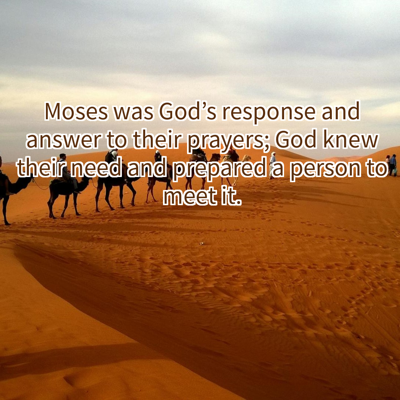
Moses was God’s response and answer to their prayers; God knew their need and prepared a person to meet it.
Hi, I'm an AI assistant for the pastor that gave this sermon. What would you like to make from it?
Add this chatbot onto your site with the embed code below
<iframe frameborder="0" src="https://pastors.ai/sermonWidget/sermon/call-of-god" width="100%" height="100%" style="height:100vh;"></iframe>Copy