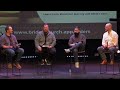
The mutual submission of Father, Son, and Spirit isn’t abstract theology—it’s the DNA of kingdom leadership. Just as God exists in collaborative unity, elders lead not as CEOs but as co-shepherds mirroring divine relationship. This model rejects top-down hierarchies, instead rooting authority in collective discernment and shared responsibility. It’s a call to embody the “seems right to us and the Holy Spirit” posture of Acts 15, where decisions emerge from prayerful collaboration rather than individual control. Such leadership protects against burnout, pride, and isolation. [24:45]
“I appeal to you, brothers, by the name of our Lord Jesus Christ, that all of you agree, and that there be no divisions among you, but that you be united in the same mind and the same judgment.” (1 Corinthians 1:10, ESV)
Reflection: Where have you equated leadership with solo heroism rather than shared stewardship? How might embracing interdependence reflect God’s nature in your relationships?
Churches often default to business-inspired structures, but Scripture reimagines leadership as a family meal. Elders aren’t boardroom executives but spiritual fathers gathered around a table, stewarding the church as kin rather than employees. This shift from institutional efficiency to relational intentionality mirrors Jethro’s counsel to Moses: distribute the weight, share the feast. The goal isn’t streamlined decisions but nourished souls. [28:43]
“Moses’ father-in-law said to him, ‘What you are doing is not good. You and the people with you will certainly wear yourselves out, for the thing is too heavy for you. You are not able to do it alone.’” (Exodus 18:17–18, ESV)
Reflection: When have you prioritized “getting things done” over cultivating family-like bonds? What one relationship could you deepen this week to reflect God’s household?
Elders aren’t elevated CEOs but “dirty sheep” called to wade into the mess. Their authority comes not from titles but proximity—like Jesus washing feet while teaching truth. This flattens hierarchies, making leaders approachable and accountable. The four men on stage aren’t untouchable experts but fellow travelers, their credibility forged in late-night prayer sessions and shared repentance. [42:16]
“So I exhort the elders among you, as a fellow elder… shepherd the flock of God that is among you, exercising oversight, not under compulsion, but willingly, as God would have you.” (1 Peter 5:1–2, ESV)
Reflection: Do you view spiritual leaders as untouchable guides or fellow strugglers? How might you prayerfully support—and honestly challenge—those who shepherd you?
True formation happens not in auditoriums but homes, where cracked mugs and vulnerable stories reveal Christ’s presence. The early church “devoted themselves… breaking bread in their homes” (Acts 2:46)—a model our elders champion. This prioritizes messy, relational investment over programmatic growth, trusting Spirit-led conversations at tables to shape disciples more than polished sermons. [58:11]
“And day by day, attending the temple together and breaking bread in their homes, they received their food with glad and generous hearts.” (Acts 2:46, ESV)
Reflection: When has a shared meal or living room conversation deepened your faith more than a sermon? Who could you invite to your table this month for intentional spiritual fellowship?
Elders commit to being “boring” about others’ faults—refusing juicy rumors, redirecting conversations toward grace. This disrupts church-destroying gossip by modeling stubborn loyalty to Christ’s body. Like Paul’s plea for “no corrupting talk” (Ephesians 4:29), they call the church to weaponize words for healing, not harm. [54:38]
“Let no corrupting talk come out of your mouths, but only such as is good for building up, as fits the occasion, that it may give grace to those who hear.” (Ephesians 4:29, ESV)
Reflection: What conversation this week tempted you to criticize rather than champion others? How can you “build up” someone today with your words?
Biblical eldership rises as a return to God’s own way of leading, not a mirror of the marketplace. The triune God’s mutual love and submission sets the pattern, so leadership in Christ’s church takes the shape of “shared, non hierarchical, Spirit led” care under the Great Shepherd. Moses never stood alone; God immediately gave him Aaron, and Jethro pressed Israel into shared oversight. Jesus called twelve to walk, minister, and suffer together. Acts sets decisions at a table of elders where “this seems right to us and the Holy Spirit.” Paul’s churches assume elders who pray, guard, and shepherd as a plurality.
The church, then, must be seen as a living body and a family, not a Sunday event or a legally bound corporation with a CEO at the top of a pyramid. A flock needs multiple shepherds. Plurality answers that ecclesiology and also answers lived reality: a single point of leadership too often becomes a single, heavy point of failure. Shared leadership spreads the spiritual burden, builds mutual accountability and submission, and protects the body.
This journey has been slow and deliberate. Early seeds were planted in 2011, sharpened through study and mission work, written into a 2022 proposal, then tested across eighteen months of late night Wednesdays where elders-in-formation examined Scripture, read Strauch, probed pitfalls, and pressed one another with confession, prayer, and discernment. A locked-in retreat laid lives bare. The repeated refrain has become, for such a time as this, “this seems right to us and to the Holy Spirit.”
Plurality is different and harder than a senior pastor model. It resists inherited status models, refuses personality-driven ministry, and insists that if it isn’t right to all four, it isn’t led to the church. It also holds conviction without elitism: the strength to “bet the farm” on Scripture and the humility to say, if pride creeps in, “oust us and start again.”
The call takes flesh in actual shepherds. One brings a steady, tender firmness that will sit in the mess and bear burdens. Another aims for a church that thinks biblically, rejects gossip, sings what is true, and grows in unity. Another leans into households and kitchen tables where Scripture and prayer form lives. All honor the indispensable partnership of their wives. Looking ahead, membership, deacons, and a bylaw rewrite will serve a deeper aim: a return to basic discipleship where homes become kingdom outposts, the Spirit pours gasoline on obedience, and the body stops consuming a product and starts belonging to a people.
Yeah. And, you know, the question always comes up, well, if this is the biblical model, why aren't more churches doing this? But at anything else about scripture, about describing the Christian life, and then ask, why doesn't more people's lives look like that? Because the way of the kingdom is hard, we in our flesh tend to choose the easier way continuously. That's the story of god's people from Genesis to Revelation is we will choose the way that seems right to us as opposed to submitting to God's way. So more churches don't do this because it is difficult, because it is harder. It is way easier to just put one guy at the top and just say, what I say goes, and that's how it is.
[00:43:26]
(48 seconds)
What I love about our church in particular as we focus and we grow is we are aligning with what we read in scripture. We encourage you to do that as well. That's why we continually say, have a bible. Bring your bible. Do not trust everything that's set up here. You need to read and find out for yourself. When we talk about this plurality of eldership, when we talk about elders being in the bible, we can point you directly where that's at, but we want you to open up your bible and read it for yourself. And that's how we are gonna disciple more and more in the way of Christ is when we are growing together as a church, and it's not a reliance on what's happening or said from the stage. And that's where we wanna get to.
[00:57:14]
(39 seconds)
And so, this is a structural way to live in mutual accountability, submission to one another, to help protect that from happening. And so, that would be how I answer that question. Why now? For such a time as this, it seems right to us and to the Holy Spirit. And this is a slow journey of getting there that really came to a culminating point about two years ago. And at that time, it was behind the scenes conversations between Evan and I. He and Cassandra first came to the church together in 2020.
[00:31:01]
(35 seconds)
Experientially, I am prone to taking on more than I should. I remember a year ago I preached on this for the first time, and I opened with a story about instead of asking for help, I carried a treadmill up my stairs, and my body paid the price for that. That was stupid. But like, spiritually, to do the same is not good for me, but it's also not good for our church family. I would also say experientially, not just here, but yes here, and in the larger capital C church, how many times have we seen that when there is a single point of leadership, it becomes a singular, heavy, with massive fallout point of failure in the life of the church.
[00:30:19]
(42 seconds)
I'm an AI bot trained specifically on the sermon from Jun 01, 2026. Do you have any questions about it?
Add this chatbot onto your site with the embed code below
<iframe frameborder="0" src="https://pastors.ai/sermonWidget/sermon/biblical-eldership-shared-leadership" width="100%" height="100%" style="height:100vh;"></iframe>Copy