The Bible isn’t just another ancient book—it’s the most well-attested document in all of history. With over 25,000 New Testament manuscripts and countless Old Testament copies, the evidence for its accuracy is overwhelming. This means that when you open your Bible, you’re not reading a story that’s been changed or lost over time, but words that have been carefully preserved and passed down through generations. The more historians and archaeologists dig, the more they find that lines up with what the Bible has said all along.
This reliability isn’t just about facts and figures; it’s about trust. If the Bible is this dependable in its history, we can have confidence in what it says about God, about us, and about the world. You don’t have to wonder if you’re building your faith on shaky ground. The foundation is strong, and it’s only getting stronger as more evidence comes to light.
“Heaven and earth will pass away, but my words will not pass away. For truly, I say to you, until heaven and earth pass away, not an iota, not a dot, will pass from the Law until all is accomplished.” (Matthew 24:35; Matthew 5:18, ESV)
Reflection: What doubts or questions have you had about the Bible’s reliability? Take a moment to write them down, and ask God to help you seek honest answers and build your trust in His Word.
One of the most surprising things about the Bible is how it doesn’t hide the flaws and failures of its main characters. Instead of painting perfect pictures, it tells the truth—even when it’s awkward or embarrassing. From Peter’s denial of Jesus to Moses’ anger, the Bible is full of real people with real struggles. This kind of honesty is rare in ancient writings, where heroes are usually flawless.
This rawness is actually good news for us. It means God isn’t looking for perfect people—He works with the broken, the doubters, and the ones who mess up. The Bible’s honesty invites us to bring our whole selves to God, not just the polished parts. When you read about the failures and comebacks of people in Scripture, you’re reminded that God’s grace is bigger than your mistakes.
“For whatever was written in former days was written for our instruction, that through endurance and through the encouragement of the Scriptures we might have hope. For whatever was written in former days was written for our instruction, that through endurance and through the encouragement of the Scriptures we might have hope.” (Romans 15:4, ESV)
Reflection: Is there a part of your story you feel tempted to hide from God or others? How might God use your honesty—just like He did with people in the Bible—to bring hope and healing?
The Bible isn’t just a book of spiritual sayings—it’s packed with practical wisdom for everyday life. Its teachings touch on relationships, money, conflict, and even mental health. Imagine what would happen if you actually lived out “be quick to listen, slow to speak,” or “as far as it depends on you, live at peace with everyone.” The world would look different, and so would your life.
God’s wisdom isn’t meant to sit on a shelf or be admired from a distance. It’s meant to be lived out, one decision at a time. When you put the Bible’s wisdom into practice, you’ll find that it’s not just good advice—it’s life-changing. God’s Word gives you a roadmap for the real challenges you face, and it invites you to trust Him with every part of your life.
“Whoever gives thought to the word will discover good, and blessed is he who trusts in the Lord. The wise of heart is called discerning, and sweetness of speech increases persuasiveness.” (Proverbs 16:20-21, ESV)
Reflection: What is one piece of biblical wisdom you’ve been admiring but not actually living out? What’s one step you can take today to put it into practice?
Life is full of moments that leave us anxious, afraid, or unsure of what to do next. In those times, the Bible isn’t just a distant book—it becomes a lifeline. Again and again, God’s Word speaks directly into our fears, offering comfort, guidance, and hope. Sometimes it’s a verse that calms your heart; other times it’s a promise that gives you courage to keep going.
God knows exactly what you’re facing, and He uses His Word to meet you right where you are. When you open the Bible in your hardest moments, you’ll find that God is not silent. He is present, speaking words of life and peace over you. You don’t have to face your fears alone—God’s promises are for you, right now.
“When I am afraid, I put my trust in you. In God, whose word I praise, in God I trust; I shall not be afraid. What can flesh do to me?” (Psalm 56:3-4, ESV)
Reflection: What is one fear or uncertainty you’re carrying today? Find a verse that speaks to it, and pray it back to God, asking Him to meet you in that place.
Believing the Bible isn’t just about accepting stories or following rules—it’s about trusting the promises God has made to you. The Bible is full of thousands of promises about God’s love, His presence, His guidance, and His salvation. Jesus came to show that every promise God made is a “Yes” in Him.
When you trust God’s promises, it changes how you see your life and your future. You can face challenges with hope, knowing that God is faithful to what He has said. Every day, you have the opportunity to stand on God’s promises, letting them shape your choices, your prayers, and your outlook. The more you trust what God has said, the more you’ll experience the hope and freedom He offers.
“For all the promises of God find their Yes in him. That is why it is through him that we utter our Amen to God for his glory. And it is God who establishes us with you in Christ, and has anointed us.” (2 Corinthians 1:20-21, ESV)
Reflection: What is one promise of God you need to cling to today? Write it down, memorize it, and ask God to help you trust Him with that promise this week.
of the Sermon**
Today’s message tackled one of the “hot ones”—the question, “Is the Bible real?” In a world full of skepticism and tough questions, we explored why the Bible stands out as uniquely reliable, honest, and transformative. We looked at the overwhelming manuscript evidence that sets the Bible apart from every other ancient document, the embarrassing honesty of its stories that point to authenticity rather than fabrication, and the practical, life-changing wisdom it offers. Through personal stories and real-life examples, we saw how the Bible isn’t just a book of rules or old tales, but a living source of hope, guidance, and God’s promises. If we can trust the Bible’s reliability, we can trust what it says about Jesus and the promises God makes to us.
**K
The Bible is the “dream team” of historic reliability. With over 25,000 ancient copies, nothing else comes close. It’s the most supported, reliable document in all of history—far surpassing the sources we use for everything we know about ancient Rome and Greece.
The more ancient copies of the Bible we discover, the more we see how accurately it’s been translated all along. Our translations are only becoming more accurate over time. The Bible can be trusted because it only becomes increasingly more reliable.
If the goal of the Bible was to create a powerful, influential image, it did a terrible job. The authors included embarrassing details about themselves and their heroes—things you’d only include if you were telling the whole truth.
The humiliating accuracy of the Bible proves its genuine, authentic reliability. If the goal was to mislead, it would have left out those embarrassing details. But if the goal was to tell the truth, they told the whole truth.
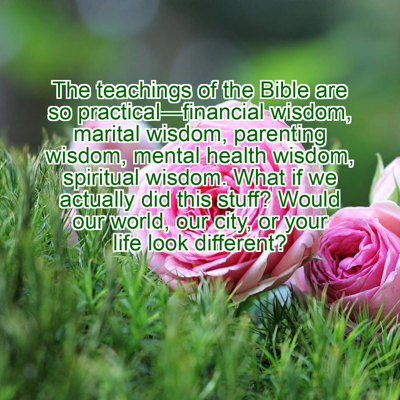
The teachings of the Bible are so practical—financial wisdom, marital wisdom, parenting wisdom, mental health wisdom, spiritual wisdom. What if we actually did this stuff? Would our world, our city, or your life look different?
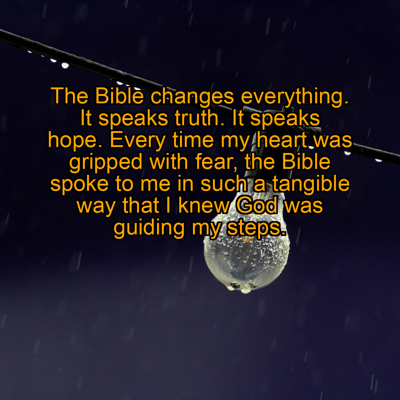
The Bible changes everything. It speaks truth. It speaks hope. Every time my heart was gripped with fear, the Bible spoke to me in such a tangible way that I knew God was guiding my steps.
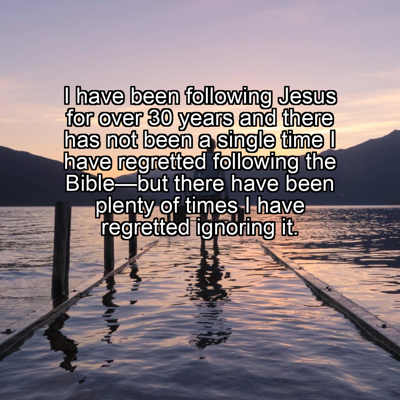
I have been following Jesus for over 30 years and there has not been a single time I have regretted following the Bible—but there have been plenty of times I have regretted ignoring it.
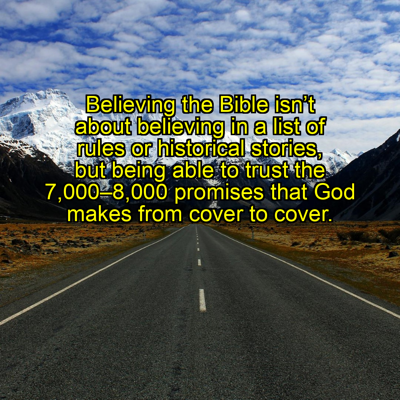
Believing the Bible isn’t about believing in a list of rules or historical stories, but being able to trust the 7,000–8,000 promises that God makes from cover to cover.
If we can trust the historical reliability, the painfully truthful authenticity, and the practical wisdom of the Bible, then is it a leap to trust what it tells us about Jesus?
The Bible is not just a book of ancient stories—it’s a source of hope, guidance, and transformation for anyone willing to listen and trust its promises.
Add this chatbot onto your site with the embed code below
<iframe frameborder="0" src="https://pastors.ai/sermonWidget/sermon/bible-hot-ones-2" width="100%" height="100%" style="height:100vh;"></iframe>Copy