Many believe that religious practices, church attendance, or moral efforts are what make someone a follower of Christ. However, true faith goes far beyond outward actions or intellectual understanding. It's not about adjusting behavior through sheer willpower, but about a profound, supernatural work that resurrects the human heart itself. This deep transformation is what truly defines a Christian, moving beyond mere religion to a living relationship. [00:30]
John 3:1-2: There was a man named Nicodemus, a leader among the Jewish people, who came to Jesus one night. He acknowledged that Jesus must be a teacher sent from God, because no one could perform the signs Jesus did unless God was with them.
Reflection: What religious habits or moral efforts do you sometimes rely on, and how might God be inviting you to seek a deeper heart transformation beyond these outward actions?
Jesus revealed to Nicodemus that entering God's kingdom requires being "born again." This isn't a physical re-entry into life, but a spiritual birth, a profound change that is entirely outside human control. Just as you cannot see the wind but know its effects, so too is the work of the Holy Spirit in bringing about this new life. It is a divine act, not something achieved through human effort or understanding, essential for truly seeing and experiencing God's reign. [02:45]
John 3:3-8: Jesus told him, "Truly, I tell you, no one can experience God's kingdom unless they are born anew." Nicodemus wondered how an old person could be born again. Jesus explained that this birth is not of flesh, but of water and the Spirit. The Spirit blows where it wishes; you hear its sound, but you don't know where it comes from or where it goes. So it is with everyone born of the Spirit.
Reflection: Can you recall a specific time or season in your life when you distinctly sensed the Holy Spirit initiating a profound spiritual change or new understanding within you?
Without the spiritual rebirth, humanity tends to remain in darkness, often preferring it to the revealing light of God. Some may believe their moral goodness is sufficient, but the true test lies in whether one believes God sent Jesus to die for sins and accepts His sacrifice. God's ultimate purpose in sending His Son was not to condemn the world, but to offer salvation. The light of Christ is only threatening if there's something hidden in the dark that one wishes to protect. [03:50]
John 3:17-21: God did not send His Son into the world to judge it, but to save it through Him. Those who believe in Him are not judged, but those who do not believe are already judged because they have not trusted in the name of God's only Son. This is the judgment: the light came into the world, but people loved darkness more than light because their deeds were evil. For everyone who does evil hates the light and avoids it, so their actions won't be exposed. But those who live by the truth come to the light, so it may be clear that their deeds have been done through God.
Reflection: What "darkness" or hidden area in your life might God be gently inviting you to expose to the light of His truth and grace, trusting in His saving purpose?
The journey of faith calls for a profound shift in focus from ourselves to Christ. John the Baptist, witnessing Jesus' growing ministry, joyfully declared, "He must become greater; I must become less." This isn't about diminishing one's worth, but about recognizing that all true significance and purpose flow from Jesus. It's a call to surrender personal ambition, titles, or even ministry achievements, allowing Christ to be preeminent in every aspect of life. This humble posture allows the light of Jesus to shine more brightly through us. [05:15]
John 3:27-30: John answered, "A person can receive nothing unless it has been given to them from heaven. You yourselves can testify that I said, 'I am not the Messiah, but I am sent ahead of Him.' The one who has the bride is the bridegroom; the friend of the bridegroom, who stands and listens for him, rejoices greatly at the bridegroom's voice. That is my joy, and it is now complete. He must become greater, and I must become less."
Reflection: In what specific area of your life or service do you find yourself wanting to increase, and how might you intentionally decrease so that Jesus can be more clearly seen and glorified through you?
The story of Nicodemus beautifully illustrates the journey from initial curiosity in the dark to open, courageous faith. Though he first came to Jesus by night, the Light followed him home, transforming his heart over time. His later actions, defending Jesus and helping with His burial, reveal a man no longer hiding but fully embracing his new identity. This transformation is not achieved by trying harder to be good, but by being born from above through the supernatural work of the Holy Spirit, leading to a life lived openly in Christ's light. [06:40]
John 19:38-42: After these things, Joseph of Arimathea, who was a disciple of Jesus but secretly for fear of the Jewish leaders, asked Pilate if he could take away the body of Jesus. Pilate gave permission. So Joseph came and took the body. Nicodemus, who had first visited Jesus at night, also came, bringing a mixture of myrrh and aloes, about seventy-five pounds. They took the body of Jesus and wrapped it in linen cloths with the spices, according to the Jewish custom for burial. Now in the place where Jesus was crucified, there was a garden, and in the garden a new tomb where no one had ever been laid. Because it was the Jewish day of Preparation and the tomb was nearby, they laid Jesus there.
Reflection: Reflect on your own spiritual journey. What evidence do you see of the Holy Spirit's supernatural work moving you from a place of hiddenness or uncertainty to a more open and courageous expression of your faith in Christ?
Religion can tidy behavior and give a decent outward life, but it cannot make the heart alive. Nicodemus shows that a religious resume—even deep learning and careful practice—can coexist with spiritual blindness. Jesus cuts straight to the core: entrance into God’s kingdom is not a matter of effort, knowledge, or moral improvement; it is a birth that comes from above. That birth is not something we can manufacture. Like the wind, it is felt, not engineered; it is the Holy Spirit bringing a new nature where only striving once lived.
Being born again changes the ground of existence. It reframes why Jesus had to be “lifted up” — not as proof of orthodoxy or as a badge of religion, but as the place where belief meets divine rescue. Salvation is offered, not earned; the decisive question is whether the heart accepts the Son’s saving work. If a person says they cannot accept that sacrifice, the problem is not a lack of moral striving but a resistance to the light that exposes what we protect in the dark.
The light of Christ does more than illuminate bad behavior; it forces clarity about loyalties. Some will defend the dark because it keeps what they value safe. Others, like Nicodemus, move from curiosity to courage: he comes by night, but the light follows him home. John the Baptist models the right response to increase and influence—he rejoices when Jesus rises and intentionally shrinks so the Savior can stand large. Ministry and reputation are subordinate to that single aim: Christ must become greater.
This is not an argument against regular worship, study, or ethical living. Those have value. But they are not the root of new life. Ask whether your trust is built on a moral decision you keep polishing or on a supernatural act you remember and feel. Invite the Spirit to do what effort cannot: to birth, to illuminate, to transform. Look at the cross and notice where new life originates—faith in the lifted Savior who brings heaven’s nature into a human heart.
Religion is excellent at shaping behavior. But Jesus didn’t come to adjust behavior—He came to resurrect the human heart, not merely fix our outward actions.
John chapter 3 answers one haunting question: What actually makes someone a Christian? Not church attendance, not moral effort, not religious knowledge.
If religion could save you, Nicodemus didn’t need Jesus; in his time religious appearance was acceptable, but Jesus said no to mere outward religion.
Spiritual birth is outside human control—like the wind; you know when He’s moving. One cannot spiritually change without the help of the Holy Spirit.
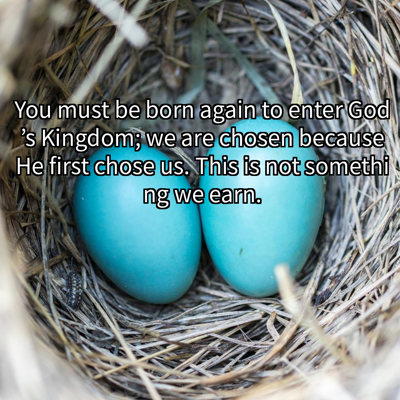
You must be born again to enter God’s Kingdom; we are chosen because He first chose us. This is not something we earn.
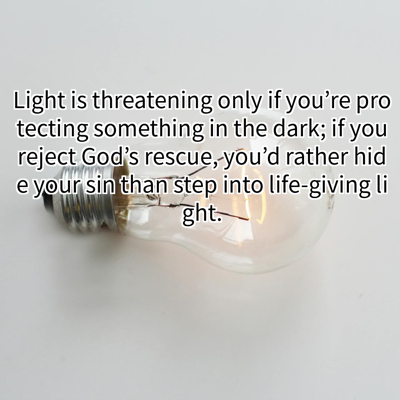
Light is threatening only if you’re protecting something in the dark; if you reject God’s rescue, you’d rather hide your sin than step into life-giving light.
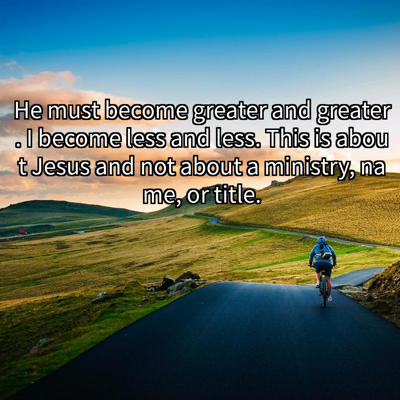
He must become greater and greater. I become less and less. This is about Jesus and not about a ministry, name, or title.
Do you look at other people in different churches and judge them as being right or wrong? Instead, start looking at them through the lens of Jesus.
Ask the Holy Spirit to do that supernatural work, and if He has, ask Him to help you grow more spiritually. Look at the cross—the Savior!
You don’t become a Christian by trying harder, but by being born from above—by the Spirit, not by our efforts or religious performance.

Add this chatbot onto your site with the embed code below
<iframe frameborder="0" src="https://pastors.ai/sermonWidget/sermon/beyond-religion" width="100%" height="100%" style="height:100vh;"></iframe>Copy