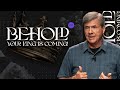
John’s vision in Revelation 19 portrays the returning King as both the living Word and the righteous Judge. From his mouth issues a “long sword” — not merely a metaphor for violence but a description of the Word’s decisive, penetrating authority that will execute God’s final judgment. That sword pierces to the core, capable of discerning between soul and spirit and exposing hidden motives, because Christ is the fullness of God’s revelation: the final, creative Word who spoke the world into being and will speak history to its consummation.
The account emphasizes Christ’s pastoral but unflinching rule. He will separate the nations as a shepherd separates sheep and goats, ruling with a rod of iron that enacts divine justice where human systems have failed. The contrast between human judgment and divine judgment is stark: earthly courts delay and distort deterrence, but the Lord’s coming decisively vindicates righteousness and unmasks self-deception.
A call to inward honesty accompanies the eschatological scene. True worship and preparedness require a broken, contrite heart—falling on the stone to be broken rather than resisting and being crushed. Suffering and pruning are reframed as the means by which intimacy with God is forged; Christ himself has already been trodden in the press, bearing the wrath that rightly belonged to sinners so that the redeemed might be spared.
The return is both judicial and kingly: Christ treads the winepress of God’s fierce wrath yet rides forth with titles that assert universal authority—“King of kings and Lord of lords.” That authority extends to his bride; believers share in delegated authority to bind and loose, to declare the forgiveness that rests in Christ’s finished work. The tone is urgent and practical: fidelity matters now because the coming will be sudden, unmistakable, and world-altering. The narrative closes with a sober invitation to faithfulness and witness, urging readiness so that others might not miss a final chance to receive the Savior before history’s decisive hour.
Key Takeaways
- 1. The Word as a decisive sword The Christ who is God’s final Word wields language that judges reality—creative, revealing, and judicial all at once. Scripture does not merely inform; it exposes motive, divides what is mixed, and effects transformation by the Spirit. This sword is the means by which truth becomes encounter and converts spectators into accountable subjects. [02:22]
- 2. Scripture pierces to hidden places God’s word reaches beneath behavior into the architecture of the heart, distinguishing soul from spirit and intention from appearance. This penetrating ministry is medicinal: conviction precedes cure, and honest self-examination invites healing rather than condemnation. Such exposure is not humiliation but the prelude to restoration. [10:07]
- 3. Come broken or be shattered The choice presented is not merely emotional but existential: submit to Christ’s refining and be made whole, or resist and face destruction. Brokenness here signifies repentance that aligns will with God’s, producing contrition that God accepts as true sacrifice. Intimacy with God is most often born in the oven of affliction. [21:46]
- 4. Christ rules as discerning shepherd The Son will separate nations with exact righteousness, rewarding the humble and exposing pretense; human systems cannot finally adjudicate what only divine wisdom can. The shepherd’s rod is corrective, not arbitrary, bringing both rescue and retribution according to truth. This brings solace to the oppressed and warning to the self-deceived. [14:18]
- 5. The return will be sudden and public The coming will be unmistakable—swift as lightning—and it will resolve history in an instant, leaving no ambiguity about God’s sovereignty. That certainty reframes vocation: faithfulness in ordinary duty becomes the right response to an imminent, decisive climax. Urgency in witness flows from the reality that opportunities can close without return. [50:05]
Youtube Chapters
- [00:00] - Welcome
- [00:14] - Reading: Revelation 19:15–16
- [01:07] - The drama and certainty of the return
- [02:22] - The “long sword”: Word as authority
- [10:07] - Scripture’s piercing power explained
- [14:18] - Christ the discerning shepherd and judge
- [21:46] - The necessity of brokenness and surrender
- [26:26] - Christ trod the winepress already
- [30:09] - Universal reign: king of kings
- [50:05] - Sudden return and final urgency