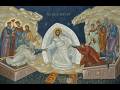
The text unfolds Easter’s claim with clear theological force: the three days from crucifixion to resurrection broaden into an “eternal now” that frames Christian identity. Baptism becomes the decisive sign that unites every believer to Christ’s death and rising; immersion into water marks a present belonging to the paschal mystery and a summons to live in the newness of life. The gospel recounting of the women at the tomb emphasizes the unexpected, embodied encounter with the risen Lord and the imperative to go and proclaim that Christ goes before the community into Galilee. Liturgical proclamation and ancient hymnody break forth in jubilant acclamation—“Christ is risen”—as the community declares that death no longer holds finality.
Drawing on a catechetical homily attributed to John Chrysostom, the text insists on radical hospitality within grace: those who labored from the first hour and those who came at the eleventh share equally in the Lord’s joy and banquet. The feast imagery underlines that forgiveness dawns from the tomb, sin loses its dominion, and death’s oppressive power dissolves as Hades meets the incarnate God and is overthrown. Scriptural echoes—“Death, where is your sting?”—translate into liturgical victory songs that locate resurrection as the firstfruit of all who sleep.
The liturgy then moves to sacramental enactment: Eucharistic words that consecrate bread and wine, intercessions for the living and the departed, and specific blessings for Easter foods like eggs as signs of the luminous new life. Prayers invoke saints, the Mother of God, and the life-giving cross while calling down mercy and protection. The service closes with a communal summons to enter the banquet hall, to break the fast together, and to celebrate the resurrection not as an abstract doctrine but as the embodied reality that reorients communal life, heals fear, and restores hope. The whole flow insists that the paschal event remains present among the baptized, that liturgy and sacrament make this presence tangible, and that the church’s table models the generous economy of divine grace.
Key Takeaways
- 1. Baptism grounds believers in resurrection Baptism places every person into the death and rising of Christ so that identity becomes participation rather than mere memory. This sacramental belonging reframes time: Christians live within the paschal “eternal now,” called to newness of life and moral transformation. Baptism therefore supplies both status and vocation—an ontological reorientation toward resurrection-shaped living. [36:30]
- 2. The resurrection abolishes death's power The risen Christ confronts death and Hades, stripping them of final victory and exposing death’s impotence before God’s creative, reconciling act. This defeat of death reorders fear, eschatology, and pastoral consolation: mortality remains real but no longer ultimate. Hope becomes confidence in life’s continuation within God’s economy rather than mere denial of loss. [1:33:45]
- 3. Grace welcomes every arrival equally The image of laborers hired across all hours portrays divine generosity that honors intention as much as deed. Mercy does not operate by merit calculus but by the free will of the Master, who gives to latecomers as freely as to pioneers. This reshapes communal judgment and invites reconciled relationships among differing spiritual practices and paces. [1:32:56]
- 4. Communion and feast unify the faithful Eucharistic words and the blessing of Easter foods show that sacramentality binds doctrine to embodied life: the broken bread and shared table enact reconciliation and sustained belonging. The feast resists scarcity thinking, insisting the church’s economy distributes abundance, forgiveness, and life. Joining the table therefore becomes both sign and means of participating in the resurrection community. [2:15:39]
Youtube Chapters