Even when we are in the center of God’s will, surrounded by His blessings and provision, spiritual deception can still find its way into our lives. Adam and Eve were placed in the garden, a place of perfect fellowship and abundance, yet the serpent approached them there. This reminds us that spiritual comfort or nearness to God’s gifts does not make us immune to subtle temptations.
It is easy to let our guard down when life feels secure and blessed, but the enemy often seeks to sow seeds of doubt in these very moments. Vigilance is not just for times of struggle or wilderness, but also for seasons of peace and plenty. God calls us to remain watchful, recognizing that spiritual attacks can come when we least expect them, even in the midst of His goodness.
Genesis 2:15-17 (ESV):
“The Lord God took the man and put him in the garden of Eden to work it and keep it. And the Lord God commanded the man, saying, ‘You may surely eat of every tree of the garden, but of the tree of the knowledge of good and evil you shall not eat, for in the day that you eat of it you shall surely die.’”
Reflection:
Where in your life do you feel most comfortable or “safe” spiritually? How might you remain alert to subtle temptations even in those places of blessing?
The enemy rarely begins with outright lies; instead, he often starts by gently nudging us to question or reinterpret what God has said. The serpent’s first words to Eve were not a denial, but a question that planted doubt: “Did God actually say…?” This tactic can feel harmless, even wise, but it is the seedbed of mistrust.
When we loosen our grip on the details of God’s commands, we open ourselves to confusion and compromise. The process of spiritual deception often begins with small, seemingly innocent questions that, if left unchecked, can grow into full-blown mistrust. God invites us to hold fast to His Word, trusting that His commands are for our good, even when we do not fully understand them.
2 Corinthians 11:3 (ESV):
“But I am afraid that as the serpent deceived Eve by his cunning, your thoughts will be led astray from a sincere and pure devotion to Christ.”
Reflection:
Is there a specific command or promise of God that you have recently found yourself questioning or reinterpreting? What would it look like to trust God’s Word in that area today?
Misunderstanding or misquoting God’s Word is not a small matter; it reveals the posture of our hearts. When Eve added to God’s command, saying they must not even touch the tree, she subtly shifted from trust to suspicion. This small change painted God as more restrictive than He truly was, opening the door to mistrust.
When we add to or subtract from God’s Word, we risk distorting His character and intentions. It is important to know God’s Word accurately and to approach it with humility, seeking to understand rather than to twist it to fit our preferences. God’s commands are given in love, and our confidence in His goodness grows as we learn to trust what He has actually said.
Deuteronomy 4:2 (ESV):
“You shall not add to the word that I command you, nor take from it, that you may keep the commandments of the Lord your God that I command you.”
Reflection:
Are there ways you have unintentionally added to or taken away from God’s Word in your beliefs or actions? How can you seek a more accurate understanding of what God has truly said?
At the heart of humanity’s fall is the desire to define good and evil on our own terms. Adam and Eve’s choice was not just about eating forbidden fruit, but about seizing the right to determine right and wrong apart from God. This ancient temptation is still present whenever we let our feelings, culture, or preferences override God’s revealed truth.
True wisdom and life are found not in self-reliance, but in humble dependence on God’s wisdom. When we insist on making our own rules, we cut ourselves off from the source of true life. God invites us to trust His definitions, believing that His ways are higher and His intentions are always for our good.
Proverbs 14:12 (ESV):
“There is a way that seems right to a man, but its end is the way to death.”
Reflection:
In what area of your life are you most tempted to define right and wrong by your own standards rather than God’s? What would it look like to surrender that area to God’s wisdom today?
God’s commands are not arbitrary restrictions, but invitations to trust His heart and receive life. In the garden, the two trees represented a choice: self-reliance or dependence on God. God’s “no” is always meant to protect a greater “yes”—the fullness of life found in Him.
True freedom is not found in grasping for knowledge or control, but in embracing the life Christ offers through His sacrifice. When we trust that God’s boundaries are for our good, we discover that His commands lead us into deeper joy, peace, and eternal life. Every “no” from God is an invitation to a greater “yes” in Christ.
Psalm 16:11 (ESV):
“You make known to me the path of life; in your presence there is fullness of joy; at your right hand are pleasures forevermore.”
Reflection:
Is there a “no” from God in your life that you have struggled to accept? How might you trust that His boundaries are actually invitations to a deeper “yes” and greater life in Christ?
In this sermon, we explored the story of Adam and Eve’s deception in Genesis 3:1-6, focusing on the anatomy of spiritual deception and its roots. We considered the significance of the forbidden tree and the serpent, not as mere symbols, but as realities imbued with meaning by God’s command. The serpent, later revealed in the New Testament as the devil, approached Eve with a question that subtly undermined God’s Word, leading her to misquote and misinterpret God’s command. This opened the door to mistrust and the desire to define good and evil on her own terms, rather than trusting God’s wisdom and intention. The sermon emphasized that the heart of sin is not just disobedience, but the attempt to redefine good and evil apart from God, and that true life and wisdom are found only in trusting God’s Word and the life offered through Christ.
The devil’s deception always begins with a simple question: “Did God really say?” The moment we start to question the accuracy or goodness of God’s Word, we open the door to mistrust and spiritual confusion.
The forbidden tree was appealing because it promised wisdom and independence, but true freedom was always found in the Tree of Life—what I call the Jesus tree. Real life comes not from self-expression, but from relationship with God.
Eve’s failure to accurately recite God’s one commandment showed a budding disregard for God’s Word. When we lose attention to even the smallest details of God’s truth, we become vulnerable to deception.
The serpent didn’t just twist God’s words—he made Eve feel as if God was unfairly holding something back. When we misinterpret God’s intentions, we start to see His commands as restrictions instead of protection.
The knowledge of good and evil must come from knowing God and His Word. When we try to define right and wrong apart from God, we’re pretending to be God ourselves.
Adam and Eve’s sin was deciding for themselves what was good and evil, instead of trusting God’s Word. We repeat this mistake whenever we let our own opinions override what God has said.
Spiritual deception starts where biblical attention fades. Be alert to the small ways you’re tempted to reinterpret or soften Scripture to fit your preferences. Stay rooted in God’s Word—read it carefully, trust it completely, and obey it fully.
Every “no” from God protects a greater “yes.” When you encounter commands in Scripture that challenge you, remember that God’s heart is good and His Word leads to freedom, not restriction.
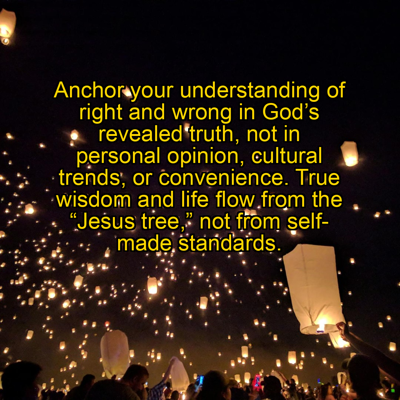
Anchor your understanding of right and wrong in God’s revealed truth, not in personal opinion, cultural trends, or convenience. True wisdom and life flow from the “Jesus tree,” not from self-made standards.
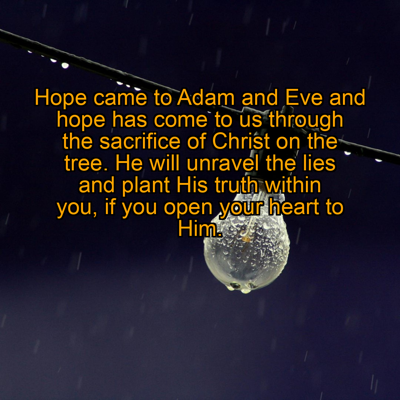
Hope came to Adam and Eve and hope has come to us through the sacrifice of Christ on the tree. He will unravel the lies and plant His truth within you, if you open your heart to Him.
Hi, I'm an AI assistant for the pastor that gave this sermon. What would you like to make from it?
Add this chatbot onto your site with the embed code below
<iframe frameborder="0" src="https://pastors.ai/sermonWidget/sermon/anatomy-deception-gen3" width="100%" height="100%" style="height:100vh;"></iframe>Copy