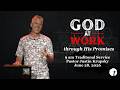
God’s promise to David carries the weight of hope. The word that comes through Nathan names David’s story and anchors it in God’s faithful action: “I took you from the pasture… I have been with you.” The covenant turns David’s eyes backward so that the present and future can steady. Hope sounds like David’s own refrain, “Taste and see that the Lord is good,” and it lands with a simple claim the heart can carry into storms: it is going to be good.
Hope from the past says it was good. The promise remembers Goliath and the giants that followed, and Psalm 77 shows a king asking hard questions, then choosing to rehearse God’s wonders of old. Memory becomes weapon and medicine. When the mind names God’s deeds, courage returns and despair loses its grip.
Hope in the present says it is good. Psalm 46 does not wait for calmer weather, because God is a very present help. The invitation stands in the quake of things: be still and know. If the ground shakes, the refuge does not, and patience becomes worship that holds the line until sight catches up with truth.
Hope in the future says it is going to be good. The covenant pledges a planted people, rest from enemies, and a house with a throne that will be established forever. Even while Absalom tears at the fabric of David’s household, Psalm 62 puts the soul in silence: “He only is my rock… I shall not be shaken.” The promise outruns the chaos and refuses to be canceled by it.
Hope through failure insists it is still going to be good. God names iniquity and promises fatherly discipline, yet binds himself with steadfast love that will not depart. David’s costly census drives him to sing mercy that removes sin as far as east from west, mercy that endures forever. Confession becomes a doorway, not a dead end, and grace lifts a heavy conscience into peace.
Hope in the Son of David seals every line. The forever throne rises in Jesus, the great Son who steps into the scroll and says, “Behold, I have come.” On the road, in the synagogue, and across the Gospels, Jesus becomes God’s Yes to every promise, setting little foretastes of heaven wherever he walks. If goodness feels thin, the church looks to him. He is with his people, and he is the God of hope.
Key Takeaways
- 1. God’s promises seed unshakable hope. God binds hope to his own character, not to circumstances. When the promise speaks, the future is not guesswork but covenant. Leaning on that word steadies the heart before the outcome appears. [26:22]
- 2. Remembered mercies reframe present giants. Memory is holy strategy. When the heart rehearses God’s past deliverances, today’s threat shrinks to size and panic gives way to prayer. Remembering becomes a way of fighting, not nostalgia. [30:31]
- 3. Future rests on a forever throne. The covenant does not stop with Solomon; it stretches to an eternal kingdom. Security for tomorrow does not live in human stability but in God’s established reign. Hope grows when sovereignty is located in the right King. [41:50]
- 4. Failure meets relentless covenant mercy. Discipline is real, but departure is not God’s way with his children. Sin can be grave, yet mercy goes further, removing guilt and reopening the future. Confession turns the key that shame cannot turn. [39:05]
- 5. Jesus is the Yes to David. The Son of David fulfills the promise, fills the Psalms, and finishes the story with his presence. Every foretaste of healing and restoration in the Gospels is a receipt of the pledged kingdom. In him, the good is not wishful thinking but guaranteed. [42:32]
Youtube Chapters
- [00:00] - Welcome
- [24:36] - Historical Books and 2 Samuel
- [26:22] - God works through His promises
- [28:33] - Hope from the past: it was good
- [31:31] - Hope for the present: it is good
- [33:43] - Hope for the future: it will be good
- [37:35] - Hope through failure: mercy holds
- [40:36] - Hope in the Son of David