Love is not a passive feeling or a polite tolerance. True Christian love moves toward the broken, not away from them. It takes sides with the wounded, shows up where it costs, and refuses to leave people as it found them. When love is costly it becomes a sacrament of presence: it goes into the darkness, carries burdens, and pays what it must to restore another’s life.
You are invited to see love as action more than sentiment. That means getting close enough to hear hard stories, staying when others walk away, and making sacrificial choices for another’s good. Such love will change how you use time, resources, words, and even your safety; it will teach you to give until it hurts because another’s healing matters more than your comfort.
Philippians 2:17-18 (ESV)
Yes, and if I am being poured out as a drink offering upon the sacrificial offering of your faith, I am glad and rejoice with you all. Likewise you should be glad and rejoice with me.
Reflection: Name one person who seems “too broken” for you to step into their life. What is one concrete, doable action you can take this week to enter their story and seek their good?
God’s love does not begin with our best choices or our spiritual performance. From the start, God takes the initiative — he reaches out, makes promises, and bears the cost of the covenant. That same pattern shows in the life of every believer: love arrives first, and only then can faith and obedience properly flow from a grateful heart.
This means you are not in a relationship with God to earn love; you are being loved so that you might live. Knowing that love precedes you frees you from performance-driven religion and lets you breathe. When you rest in a God who loved you before you loved him back, your service and generosity become responses, not means to win approval.
Genesis 17:1-4 (ESV)
When Abram was ninety-nine years old the LORD appeared to Abram and said to him, “I am God Almighty; walk before me, and be blameless, that I may make my covenant between me and you, and may multiply you greatly.” Then Abram fell on his face. And God said to him, “Behold, my covenant is with you, and you shall be the father of a multitude of nations.”
Reflection: Remember a time you felt unworthy of God’s love. Can you write a one-paragraph prayer aloud today that thanks God for loving you first despite that unworthiness?
Our culture often flattens love into mere acceptance or the absence of criticism. But biblical love is not the same as complacency. It refuses to settle for comfortable indifference and instead seeks the true good of others, even when that requires hard words, correction, time, or sacrifice.
To love as Jesus loved means risking offense for the sake of another’s growth, confronting sin with humility, and entering messy lives with practical care. It looks like honest compassion that calls people higher, even when it is unpopular or inconvenient. This kind of love builds character and cultivates flourishing where mere tolerance leaves things to rot.
Romans 12:9-10 (ESV)
Let love be genuine. Abhor what is evil; hold fast to what is good. Love one another with brotherly affection. Outdo one another in showing honor.
Reflection: Identify one relationship where “tolerance” has replaced true love. What is one sacrificial step (a time investment, a difficult conversation, an act of service) you can take this week to move from passive acceptance to active love?
You cannot give away what you do not possess. The work of loving others begins with being loved and filled by Christ. When Christ dwells in the heart, his love roots and grounds the life, and that love naturally overflows into words, decisions, and habits. This is not a task of willpower but of receiving.
Invite Christ to take more space in your life today. Simple, repeated acts of surrender — silence, prayer, sacramental rest — help the love of Jesus settle into the corners you keep locked. As the love of Christ fills you, patience, gentleness, and courage begin to come more easily, and your life becomes a vessel from which others can drink.
Ephesians 3:17-19 (ESV)
so that Christ may dwell in your hearts through faith—that you, being rooted and grounded in love, may have strength to comprehend with all the saints what is the breadth and length and height and depth, and to know the love of Christ that surpasses knowledge, that you may be filled with all the fullness of God.
Reflection: This week, set aside 15 minutes each morning to sit in silence and pray, “Fill me, Lord; overflow into this hour.” After three days, note one specific way your words or actions toward someone changed.
When Christ’s love takes root in a person, it does not stay private; it reforms families, friendships, and neighborhoods. That love heals wounds, restores dignity, and reconciles brokenness. It gives people a new identity and a renewed purpose, so the world begins to see Jesus in how his people live.
Believers are called to be channels of that reconciling love. Small acts — a meal for a struggling family, a patient conversation with a neighbor, a deliberate welcome to someone excluded — can begin to remake places over time. The invitation is always open: receive this reconciling love, let it change you, and then let it flow out to renew the world around you.
Colossians 1:19-22 (ESV)
For in him all the fullness of God was pleased to dwell, and through him to reconcile to himself all things, whether on earth or in heaven, making peace by the blood of his cross. And you, who once were alienated and hostile in mind, doing evil deeds, he has now reconciled in the body of his flesh by his death, in order to present you holy and blameless and above reproach before him.
Reflection: Name one broken place in your community (work, neighborhood, school). What is one concrete, Christ-shaped initiative you can begin this month (a meal, a conversation, a practical help) to let God’s love start healing that place?
of the Sermon**
This morning’s sermon explored the centrality of love in the Christian life, as taught and embodied by Jesus. We began by looking at Jesus’ answer to the greatest commandment—love God and love your neighbour—and then considered how Jesus’ love is not passive or merely tolerant, but active, costly, and self-sacrificial. The sermon challenged the modern, watered-down definition of love as mere acceptance or passive tolerance, and instead pointed to the biblical definition: “This is how we know what love is: Jesus Christ laid down his life for us.” Through the story of God’s covenant with Abraham and the ultimate fulfillment in Jesus’ sacrificial death, we saw that God’s love is unconditional, transformative, and freely given, not based on our performance or worthiness. The invitation was extended to receive this love afresh, to let it fill and overflow from our lives, so that the world might see Jesus through us.
**K
Love isn’t just passive acceptance or tolerance. True love is costly, self-sacrificial, and active. It doesn’t just put up with us or leave us as we are—it steps in, gives up its life, and transforms us.
The love of God is not something you have to earn or achieve. You don’t have to check any boxes or hit a standard. Jesus didn’t wait for you to be perfect—he loved you first, unconditionally.

If you want to embody this great love, you need to receive the love of God first. Open your heart to the love Jesus has lavished on us—a well that does not run dry.
Love is the most important thing. It’s the non-negotiable of the Christian life, the very thing that sets us apart in the world and makes Jesus known to others.
When the love of Jesus is within you, it will spill out everywhere and transform your life—and the lives of those around you. This is how we know what love is: Jesus Christ laid down his life for us.
Our culture often defines love as mere acceptance or tolerance, but that’s a weak definition. Real love is not indifferent—it’s deeply engaged, transformative, and never leaves us unchanged.
The love of God is transformative. It can heal you, restore you, redeem you, and lift you out of brokenness. You will experience grace, freedom, hope, and the joy of being deeply known.
If Jesus lives in you, he’s going to start “poking out everywhere.” When you receive his love, it overflows into every part of your life, and people will begin to see it.
Love never fails. It was here before the creation of the world and will last long after everything else fades away. Love is the greatest thing of all.
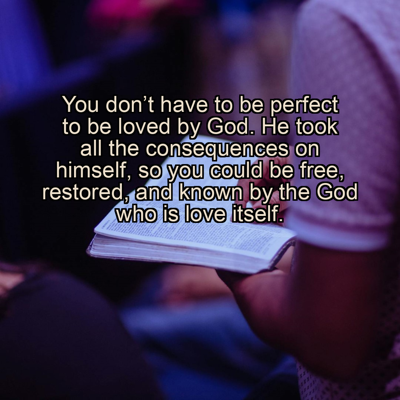
You don’t have to be perfect to be loved by God. He took all the consequences on himself, so you could be free, restored, and known by the God who is love itself.
Add this chatbot onto your site with the embed code below
<iframe frameborder="0" src="https://pastors.ai/sermonWidget/sermon/2025-11-30-transcript1" width="100%" height="100%" style="height:100vh;"></iframe>Copy