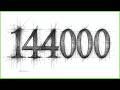
The number 144,000 stands right in the middle of Revelation’s mystery, curiosity, and end-time hope. Revelation seven places John on Patmos, hearing a precise number just before seeing a multitude so vast no one can count it. John hears of 12,000 from each of the 12 tribes, sealed before the winds of destruction are released. The text raises the familiar question, literal or symbolic, but it presses a deeper question: whether the heart is prepared to join the song of the 144,000.
Revelation seven first shows four angels holding back the four winds, while another angel from the east carries the seal of the living God. The seal marks the servants of God on their foreheads before judgment falls. The old census lists in Israel often counted soldiers, workers, and those who belonged to the covenant people, so this number carries the feel of an ordered, prepared people. The 144,000 stand as a people made ready for God’s final victory and full restoration.
The law of large numbers says that life becomes predictable when the sample gets big enough. Human systems run on averages, probabilities, shifting bars, and statistical outcomes. God does not count that way. God seals one by one, knows each servant by name, and refuses to round anybody up or down. Psalm 147 says God numbers the stars and calls them by name, and Jesus says even the hairs of the head are numbered. The sealed servants are not lucky outliers. They are the deliberate fulfillment of covenant promise.
The number represents completeness, not chance. The moving standard of a professional exam shows how human systems can reward some and exclude others by changing the bar. Revelation seven shows the opposite. The winds are held back until every servant of God is sealed. No omissions, no approximations, no margins of error.
John hears the 144,000, then sees the great multitude from every nation, tribe, people, and language. The multitude does not erase the sealed company. It shows the overflow of the same grace. Schubert’s unfinished symphony becomes a fitting contrast: human genius can leave a composition incomplete, but the divine Composer finishes every measure of redemption. The 144,000 stand like completed movements, and the innumerable multitude swells like the full symphony before the throne.
Revelation seven ten gives the song: “Salvation belongs to our God who sits on the throne and to the Lamb.” Jesus paid it all. He did not merely challenge the test. He completed the whole program, lived the perfect life, died the deserved death, and credits his finished work through faith. The bar no longer moves, the winds are still restrained, and the invitation is to live sealed, reject statistical despair, and learn the new song now.
##
Key Takeaways
- 1. Live with sealed assurance The sealed servants do not stand on a moving human standard. God does not send a postcard that says “passed” or “failed” after the rules have quietly changed. The seal means God’s claim is personal, precise, and covenantal, not statistical or uncertain. [33:28]
- 2. God does not count averages The world measures people by probabilities, trends, and large samples. Revelation shows a God who knows each servant by name and seals each one with exact care. Heaven does not run on averages, because divine love refuses to treat any faithful life as a rounding error. [13:01]
- 3. The Lamb finished the program Human effort can feel like an exam where the bar keeps moving. Jesus did not merely score well enough on behalf of sinners, but fulfilled the whole righteous life that sinners could never complete. Faith rests in the One who already passed the test, not in an 85% performance hoping to be enough. [30:29]
- 4. The song is not unfinished Schubert’s unfinished symphony shows the limit of even great human ability. Redemption is different, because the divine Composer does not abandon a single measure of his purpose. The 144,000 and the multitude together declare a finished song that probability could never compose.
## [27:33]
Youtube Chapters