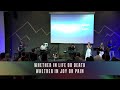
A child’s features often mirror their parent’s—hair color, smile, mannerisms. But Scripture points to a deeper mark of spiritual parentage: love for fellow believers. Just as physical traits confirm biological lineage, selfless love confirms heavenly adoption. This love isn’t optional decoration but DNA-level evidence of God’s Spirit at work. It answers Cain’s hatred with Christ’s sacrifice. To lack this love isn’t mere imperfection—it reveals an entirely different lineage. [44:17]
“For this is the message that you have heard from the beginning, that we should love one another.” (1 John 3:11, ESV)
Reflection: Where do you see the “family resemblance” of Christ’s love most clearly in your relationships? What situation today invites you to choose love over mere tolerance?
Hatred wears many masks: quiet resentment, gossip, dismissive pride. John strips these disguises, linking hatred to Cain’s murderous legacy. Just as Abel’s righteousness exposed Cain’s sin, Christlike love provokes hostility in those aligned with evil. Every bitter thought, every withheld forgiveness, whispers allegiance to the same spirit that fueled history’s first murder. But grace rewrites bloodlines. [46:56]
“We should not be like Cain, who was of the evil one and murdered his brother. And why did he murder him? Because his own deeds were evil and his brother’s righteous.” (1 John 3:12, ESV)
Reflection: What quiet hatred have you rationalized as “justified”? How might confessing it as murder align you with Christ’s heart instead of Cain’s?
Doubt often shouts, but assurance whispers through persistent love. John anchors confidence not in dramatic experiences but in the steady pulse of Christlike care for believers. This love isn’t a trophy earned but a heartbeat sustained by God’s indwelling Spirit. When persecution comes or faith feels fragile, the simplest act of love—a meal shared, a prayer whispered—becomes God’s fingerprint on your soul. [51:45]
“We know that we have passed out of death into life, because we love the brothers. Whoever does not love abides in death.” (1 John 3:14, ESV)
Reflection: What specific act of love this week reminded you of God’s work in you? Where is He calling you to love boldly as His assured child?
True love measures not in poetic words but in calloused hands. John mocks hollow affirmations, demanding love that feeds hungry mouths and defends the persecuted. Like checking a child’s toes for family traits, God examines our practical care for His people. This love mirrors Calvary’s bloody sacrifice, not Hallmark sentimentality. It’s inconvenient, costly, and irrefutably real. [54:42]
“But if anyone has the world’s goods and sees his brother in need, yet closes his heart against him, how does God’s love abide in him? Little children, let us not love in word or talk but in deed and in truth.” (1 John 3:17–18, ESV)
Reflection: What “toe-length” act of love—unnoticed but essential—is God asking you to perform today? Where have words replaced action in your relationships?
Persecution feels like failure until you see it as family resemblance. Jesus promised hatred would trace His followers like a birthmark. When mocked for biblical truth or excluded for righteous choices, this hostility confirms we mirror Christ’s image in a world that crucified Him. Like a child’s scraped knee proving they played hard, persecution scars authenticate our adoption. [56:07]
“If the world hates you, know that it has hated me before it hated you. If you were of the world, the world would love you as its own; but because you are not of the world, but I chose you out of the world, therefore the world hates you.” (John 15:18–19, ESV)
Reflection: Where have you mistaken comfort for compromise? How might today’s rejection refine your identity as Christ’s heir?
John opens 1 John 3:11-18 by restating what the church has heard from the beginning: “we should love one another.” The text makes love for Christians a family mark. Jesus already tied discipleship to love in John 13, so John insists that any teaching that treats love as optional contradicts the apostolic word. The command is not new, but it remains binding, public, and practical.
John then lets Cain and Abel interpret the contrast between two lineages. Cain stands as the pattern of the children of the devil. His deeds were evil, Abel’s were righteous, and Abel’s righteousness exposed Cain’s darkness. Cain’s hatred ripened into murder because unrighteousness cannot stand righteousness. Jesus had already declared that hate is heart-murder, so John concludes that hatred of a brother unmasks a spiritual death that has not been replaced by abiding life.
The text also draws out assurance. Love for the brothers is evidence that someone has passed out of death into life. The Spirit’s indwelling seed produces love, and that fruit marks God’s children. Where such love is absent, the text does not let anyone hide behind profession; it presses the urgent grace of adoption through the gospel of Christ crucified and risen, inviting sinners to repent and receive the Father’s name.
John does not leave love as a sentiment. Christ defines love by the cross: “he laid down his life for us.” The pattern becomes the church’s practice. Love moves past words into deeds and truth, meeting real needs with real goods, and, when called upon, laying down life for the brothers. Such concrete care becomes a public witness that Christ’s life abides within.
Finally, John names a mark that often surprises believers: “Do not be surprised, brothers, that the world hates you.” The world’s hatred is not an accident; it has been the devil’s mark since Cain. Jesus prepared his servants for this, and Paul confirmed it: all who desire to live a godly life in Christ Jesus will be persecuted. Yet even here, the text threads comfort through the cost. Hatred from the world identifies the righteous with Christ and his family. The testimony of saints who suffered for Christ bears this out, showing how belonging to the Father steadies the soul when the world’s rage rises.
``To Jesus, an attitude of hate in your heart is equivalent to murder, and it is not an attribute of a Christian. To the Christians in Asia Minor, to the Christians in every time John is saying to us, don't be like Cain, don't hate your brother. If he were to write this letter today, he would say, don't hate other Christians. Why? Because they're your brothers. They're your family. Don't hate them because hatred of Christians is the mark of the children of the devil.
[00:49:50]
(32 seconds)
#DontHateChristians
And you do not have to travel to other countries anymore to witness hatred of Christians. Hatred for us, our righteous beliefs and our righteous practices is on the rise in our own country. And Christians, will continue because it has been this way since the beginning. This has been a mark of the children of the devil since the days of Cain. So there you have it. Two identifying marks. Love for one another identifies the children of God. Hatred for the brothers identifies the children of the devil.
[00:50:58]
(34 seconds)
#LoveVsHatred
I mean, look around at our world and you will see hatred of the children of God. 388,000,000 Christians right now are presently living in high levels of persecution. 4,849 of them have been killed so far this year for their faith. Who were they murdered by? By the children of the devil. Why? Because the children of the devil's deeds are evil, the children of God's deeds are righteous, and the children of the devil hate us.
[00:50:28]
(30 seconds)
#PersecutedForFaith
Evidently, there were some in the church who were surprised. Wait, these other people hate us. I have found the same surprise exists in the church today. I have had conversations or witness professing Christians who were surprised to hear that they will be persecuted for following Jesus. That the world will hate them, and frankly, I'm surprised by their surprise because Jesus said we would be hated by the world. John 15, he said, if the world hates you know that it hated me before it hated you.
[00:56:09]
(31 seconds)
#WorldWillHateYou
This is a message you have been hearing since the beginning of your salvation. We should love one another. Well, if this is something they've been hearing since the beginning, why does John need to say it again? Well, is believed that the false teachers that were infiltrating the church in Asia Minor were telling them that love was not an essential mark for Christians. Mean, can you imagine a message like that being preached from stages like this today?
[00:44:53]
(31 seconds)
#LoveIsEssential
Jesus came and died on that cross for the forgiveness of sins. He was buried three days he three days later he rose from the grave. This is the good news, what we call the gospel. It is good news because everyone who repents of their sins and turns in faith to trusting in Jesus, they have their sins forgiven and they're adopted into the family of God. They can say that God is their father. If this morning the test is revealing to you that you are not a child of God, you can be,
[00:53:29]
(33 seconds)
#RepentAndBeAdopted
John's message is the same for us. Don't ever listen to a message that says we don't have to love one another. Listen to the message that comes from our savior, the message that you've been hearing from the beginning, the message that was proclaimed by his apostles, we should love one another. This is the mark of a child of God. What about those who are not Christians? While love for Christians identifies the children of God, the absence of love for Christians reveals a different family lineage.
[00:46:20]
(33 seconds)
#LoveMarksGodsChildren
these are less commonly known marks that identify a child belongs to a parent, and frankly, they're marks that surprise us. Well, this morning, we are going to discover a mark of a true Christian that I have found surprises many Christians. If you have your bibles, open them with me to first John chapter three. First John three eleven through 18. If you need a bible, there should be some under the seats in front of you.
[00:41:11]
(27 seconds)
#DiscoverTrueMarks
I'm an AI bot trained specifically on the sermon from Jun 08, 2026. Do you have any questions about it?
Add this chatbot onto your site with the embed code below
<iframe frameborder="0" src="https://pastors.ai/sermonWidget/sermon/1-john-3-11-18-love-one-another" width="100%" height="100%" style="height:100vh;"></iframe>Copy