It is easy to let the wonders of God’s creation fade into the background of daily life. The sky, the trees, the laughter of a child—these are all invitations to marvel at the Creator. When we treat God’s works as ordinary, we risk losing the sense of awe that fuels gratitude and worship. Awe and wonder are not just fleeting emotions; they are the foundation of a living faith that responds to God’s glory in every moment.
God’s glory is not hidden; it is declared by the world around us. When we pause to notice, our hearts are stirred to praise. But when we become numb to His works, we suppress the truth and miss the opportunity to glorify Him. Today, let your heart be awakened to the beauty and majesty of God in the everyday, and let that wonder lead you to deeper gratitude.
Psalm 19:1-2 (ESV): “The heavens declare the glory of God, and the sky above proclaims his handiwork. Day to day pours out speech, and night to night reveals knowledge.”
Reflection: What is one ordinary thing you see every day that you can pause to notice and thank God for today?
Spiritual bondage does not always announce itself loudly. Like the woman in Luke 13, we can carry burdens—resentments, fears, or patterns—that quietly weigh us down over time. These chains may not be visible to others, but they stoop our spirits and keep us from walking in freedom. Jesus sees us in our hidden struggles and calls us to bring them into His presence, even when we are unsure what freedom will look like.
Freedom begins with honesty. It is easy to ignore or minimize the things that cripple us, but Jesus invites us to name them and trust Him with them. He is not distant from our pain; He draws near to restore and release. Today, consider what burdens you have carried for too long, and bring them before the One who sets captives free.
Isaiah 61:1 (ESV): “The Spirit of the Lord GOD is upon me, because the LORD has anointed me to bring good news to the poor; he has sent me to bind up the brokenhearted, to proclaim liberty to the captives, and the opening of the prison to those who are bound.”
Reflection: What is one burden or pattern you have quietly carried that you can name before God today, asking Him for freedom?
Religious routine can become a comfortable habit, but it can also blind us to the needs and miracles around us. The synagogue leader in Luke 13 was so focused on rules that he missed the wonder of a woman’s healing. When faith becomes a checklist, compassion is often the first casualty. God calls us to a living faith that celebrates freedom and restoration in others, not one that clings to self-righteousness.
True devotion is marked by a readiness to rejoice in the work God is doing, even when it disrupts our expectations. Compassion is the fruit of a heart that remains in awe of God’s love and redemption. Today, ask God to open your eyes to the ways He is working in the lives of those around you, and to give you a heart that celebrates, not criticizes, His miracles.
Micah 6:6,8 (ESV): “With what shall I come before the LORD, and bow myself before God on high?... He has told you, O man, what is good; and what does the LORD require of you but to do justice, and to love kindness, and to walk humbly with your God?”
Reflection: Who in your life is experiencing restoration or freedom? How can you celebrate and support what God is doing in them today?
Jesus declared the woman free before she experienced physical healing. In our own lives, spiritual freedom often comes before we see outward change. There may be areas where you are still waiting for full restoration, but in Christ, you are already set free. Gratitude for this spiritual reality can fuel worship and hope, even as you wait for God’s work to unfold in other areas.
It is easy to become discouraged when change is slow or invisible. But God’s promises are true, and His declaration of freedom is not dependent on our circumstances. Today, let gratitude for what Christ has already done fill your heart, and let that gratitude sustain you as you wait for the fullness of His restoration.
2 Corinthians 4:16-18 (ESV): “So we do not lose heart. Though our outer self is wasting away, our inner self is being renewed day by day. For this light momentary affliction is preparing for us an eternal weight of glory beyond all comparison, as we look not to the things that are seen but to the things that are unseen.”
Reflection: What is one area where you are waiting for outward change? How can you express gratitude for the freedom Christ has already given you today?
The beauty of creation is breathtaking, but the greatest wonder is that the Creator sees, loves, and restores each of us personally. If words like freedom, restoration, and redemption have become routine, it may be time to ask what has dulled your sense of wonder. God’s invitation is to let go of whatever cripples your spirit—pride, bitterness, or routine—and to stand in awe that the God who made the universe has called you His own.
Personal restoration is not just a theological idea; it is a lived reality. God’s love is not distant or abstract—it is intimate and transformative. Today, ask God to renew your sense of wonder at His personal love for you, and to help you let go of anything that keeps you from standing tall in His presence.
Zephaniah 3:17 (ESV): “The LORD your God is in your midst, a mighty one who will save; he will rejoice over you with gladness; he will quiet you by his love; he will exult over you with loud singing.”
Reflection: What has dulled your sense of wonder at God’s personal love and restoration? What is one thing you can let go of today to stand in awe before Him?
of the Sermon:**
Today’s sermon, “What Cripples Us: Awe & Wonder,” explored the ways we lose our sense of awe before God and how that loss can cripple our spirits. We began by reflecting on the majesty of God’s creation and the call to respond with gratitude and wonder, not just with words but with our lives. Through the story of the bent-over woman in Luke 13, we saw how spiritual bondage can manifest in our lives, and how Jesus alone brings true freedom and restoration. The sermon contrasted the woman’s physical bondage with the synagogue leader’s spiritual bondage—a compassion crippled by self-righteousness. We were challenged to examine what we hold onto that overwhelms us more than God, and to consider whether we have allowed religious routine or pride to blind us to the awe and wonder of Christ’s love and redemption.
**K
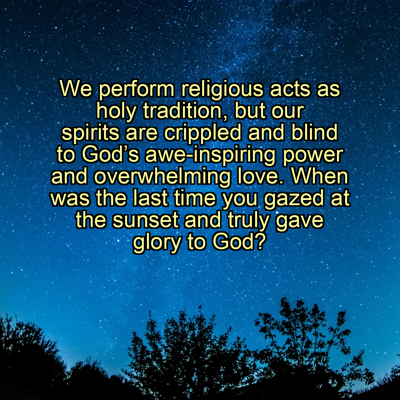
We perform religious acts as holy tradition, but our spirits are crippled and blind to God’s awe-inspiring power and overwhelming love. When was the last time you gazed at the sunset and truly gave glory to God?
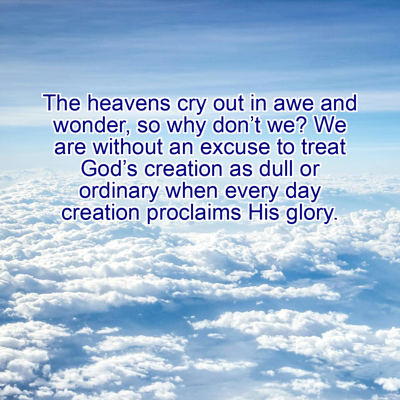
The heavens cry out in awe and wonder, so why don’t we? We are without an excuse to treat God’s creation as dull or ordinary when every day creation proclaims His glory.
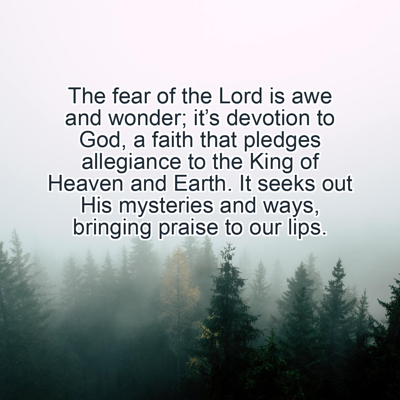
The fear of the Lord is awe and wonder; it’s devotion to God, a faith that pledges allegiance to the King of Heaven and Earth. It seeks out His mysteries and ways, bringing praise to our lips.
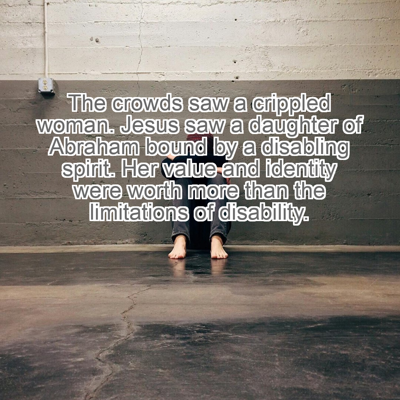
The crowds saw a crippled woman. Jesus saw a daughter of Abraham bound by a disabling spirit. Her value and identity were worth more than the limitations of disability.
It’s awfully difficult to glorify God or show Him gratitude when we’re bound by darkness or suffering. But it’s not impossible. Without knowing the result, she came before the Lord that Sabbath day.
Jesus gives us freedom from what disables our spirits. Freedom provokes gratitude—wonder that you can be set free; restoration provokes glory—wonder that His hand is for you, the same hand that set the stars in the sky.
The woman had a spirit that crippled her body. The synagogue leader, however, had a spirit that crippled compassion. Both were disabled—one physical, the other spiritual.
Compassion is not work. Compassion enables others to rest. As the worker unties their ox on the Sabbath, so the Lord, who is our Sabbath rest, has compassion on us, unbinding us and leading us to restoration.
Awe and wonder before the Lord humble us. Pride and indignation, however, will humiliate us. There is judgment for those who refuse to fear the Lord, but for those who receive freedom in Christ, there is redemption.
Why is there more awe and wonder in creation than for the Creator? He does more than paint the sky—He sees you, became flesh, died for you, and arose from the grave, conquering death for eternal life.
Add this chatbot onto your site with the embed code below
<iframe frameborder="0" src="https://pastors.ai/sermonWidget/sermon/01_what_cripples_uspdf" width="100%" height="100%" style="height:100vh;"></iframe>Copy