Churches in Wooster

Active churches in Wooster

1912 Burbank Rd., Wooster
3 sermons

Types of churches in Wooster

Wooster Churches for College Students

With The College of Wooster anchoring the Beall Avenue corridor, several congregations offer rides, late-morning or evening services, and small groups tuned to student schedules. You’ll find worship styles from acoustic to band-led, plus volunteer opportunities with downtown nonprofits and community events near Public Square and the Wayne County Fairgrounds.

Historic Downtown Churches

Centered around Public Square and the surrounding historic streets, these congregations worship in brick-and-stone sanctuaries with choirs, pipe organ, and seasonal liturgy. They often run food pantries, concerts, and neighborhood outreach serving residents in the walkable core and along the Beall Avenue corridor between campus and downtown.

Mennonite & Brethren Churches

In and around Wooster—especially toward Apple Creek, Kidron, and the rural east side—these churches reflect the region’s Anabaptist roots. Expect simple, scripture-centered services, robust mutual-aid networks, and community meals that connect farm families and tradespeople who shop or work in town.

Wooster Catholic Churches

Long-established parishes provide Mass, confession, and sacramental life for multi-generational families across Wooster and nearby townships. Traditional worship is complemented by parish festivals, Lenten fish fries, and faith-formation programs, typically within an easy drive of the Cleveland Road and north-end retail corridors.
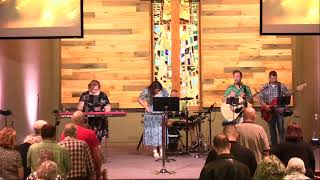
Sermon clips from Wooster churches

35s
“I want you to picture a train for just a minute if you will. The engine always comes first and the cars will follow suit behind it. If you disconnect the cars from the engine, eventually, all the cars are gonna stop moving. Love for god, that is the engine that drives everything and love for people is the fruit or the cars that are going to follow suit. When the order stays right, everything moves with extreme power but when people come first and god is secondary, everything is completely stalled and it just doesn't work.”
33s
“He emptied himself of literally everything that he was entitled to and sacrificially demonstrated his love for us by dying on a cross. Real love, real love at its best on our terms, real love gives time, it will carry burdens, it forgives even when forgiveness is not deserved, it list listens patiently, and it will serve quietly. And loving people is going to cost us something. What does it mean to truly love people and what is the cost for humanity?”
28s
“These passages depending on what circle you're in can sound kinda harsh. Maybe even in some Christian circles, we would say, no, this is hate speech because I can love god and still have a problem with people. I can love god and maybe still despise certain people But if there is no evidence in our life of transformed relationships and there is absolutely no effort on our part to do so, we would have to stop and ask the question based on scripture, did we even have love for god to begin with?”
28s
“It changes how I see strangers. It changes how I see people who are genuinely hurting in our society. The greatest evidence that God is working in our hearts is not emotional worship, but rather it's transformed relationship. That's how we see it. John wrote this in his first epistle. First John chapter four twenty through 21. He said, if anyone says, I love God and hates his brother, he is a liar.”
19s
“"If you don't desire to live different, you will fight the way the world fights. You will engage in meaningless arguments and never be fully prepared with the truth that is Jesus Christ that is what you need to transform lives. That is what's needed. It's not our hard stances. It's not pushy attitudes."”
19s
“"If you have surrendered to God and your life doesn't reflect any of the changes that should be seen by a Christian, or if the changes haven't made any kind of impact, you have to start questioning, what do I have to do to change? What steps do I need to take in order to get on track and live the way God is asking me to live?"”
19s
“"If we never watch anything secular, like the news, for example, how are we going to know how to pray for our world? You know, one study shows that 94% of all believers will convert by the time they are 18 years old, and the bulk of those that convert will do so by the time they're actually 14."”
21s
“"How are we expected, and this is a fair question people have asked us, how am I expected to stand for life when you're living in a culture that says abortion is legal? Deal with it. How do we proclaim the name of Jesus boldly when the culture says all religions lead to the same place and all through the same God, because essentially they say all the gods are actually the same?"”
22s
“"How do we love a neighbor who oftentimes seems to be unlovable? How do you love a neighbor who constantly gives you dirty looks when you look across the fence at them, or they throw things into your yard, or they just totally avoid you at all costs, or they mow their yard three times a week and you feel obligated to keep up with them? How do you love people like that? That's hard."”
20s
“"We are called by God to transform the world around us, but that all starts with us choosing to be transformed by Jesus Christ. Jesus, the one who died. The one who was buried and the one who was resurrected. Resurrected to give us eternal life. All of us. His church. That's why he came. To give us that gift."”

Why Wooster churches are unique

As a college town anchored by The College of Wooster, churches in Wooster blend intellectual curiosity with welcoming community life. Many Wooster churches create space where students and professors mix with long-time residents, leading to ministries that emphasize global awareness, thoughtful teaching, and the arts—think college student ministries, young adults and professionals, and interfaith dialogue and learning.
Set amid rich farmland and near Amish and Mennonite communities, Wooster, OH congregations often emphasize simplicity, service, and close-knit relationships. This rural heritage shows up in rhythms like shared meals, neighborly help, and music that honors tradition, with some congregations valuing multi-generational family culture, service projects and mutual aid, and a cappella hymn singing.
The small-city scale and strong nonprofit network encourage churches in Wooster to collaborate on tangible needs, from food security to seasonal outreach, and to invest in family life. Access to parks, trails, and Secrest Arboretum also nudges faith communities toward stewardship and outdoor gatherings, fostering creation care and community gardens, strong kids programs for young families, and recovery and support groups.