Churches in Stafford

Active churches in Stafford

525 Garrisonville Rd, Stafford
7 sermons
1700 Courthouse Rd, Stafford
3 sermons

Types of churches in Stafford

Contemporary Churches in Stafford

These congregations feature modern worship bands, practical messages, and kid check-in systems, often meeting in newer buildings or flexible spaces along Garrisonville Road and around Embrey Mill. They tend to draw I‑95 commuters and young families who want casual services, strong small groups, and tech-friendly options like livestreams and app-based giving.

Historic & Liturgical

Stafford’s older congregations preserve traditional liturgy, choral music, and sacramental rhythms in architecturally historic sanctuaries. You’ll find reverent services in colonial-era churches near Falmouth and Aquia Creek, appealing to residents who value continuity, stained glass, and a quieter pace of worship.

Stafford Military Community Churches

With Marine Corps Base Quantico just to the north, these churches intentionally serve active-duty families, veterans, and DoD civilians. Expect flexible service times, support groups for deployments and PCS transitions, and strong youth programs in neighborhoods like North Stafford, Widewater, and around the courthouse area.

Multicultural & Spanish-Language Churches

Reflecting Stafford’s growing diversity, these congregations offer bilingual worship and ministries that connect Hispanic, African, Asian, and Caribbean families. Many host ESL classes and community outreach along the Route 1 corridor and near VRE stops such as Brooke and Leeland Road, fostering cross-cultural community during the week.
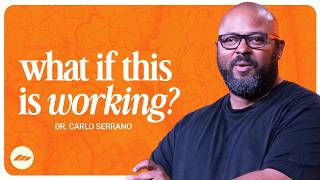
Sermon clips from Stafford churches

40s
“I want you to sit in the tension of that because we kinda live in a cultural moment where people talk as if there's a threat to the gospel, where people are talk like, if we don't do this, the gospel is at risk. And I would say any gospel that shrinks back because of the affairs of man or the whims of a politician or the wickedness of humanity is no gospel at all. I don't wanna serve that God if if the affairs of us mere mortals shakes his divine plan. Paul says, what has happened to me has really served to advance the gospel. Do we view what is happening to us that way?”
78s
“He looks at you and he says this, what if your spouse wasn't the enemy? What if you had a part to play in it? What if your selfishness was? See where there is jealousy and selfish selfishness, there will be confusion and every kind of evil. Here here's the thing. If you want the world's way, live with this. You will get the world's way if you live a selfish life. So James would walk into the courtroom and say, I know you have your argument ready. But before you make your case, I wonder if you could drop your finger, and I wonder if you can own your part.”
39s
“What do we do with this? I think if you have everything Paul says, we we need to ask a better question. Think about you're there and ask a better question. Not how do I get out of this? Instead, hey, God. What are you doing? Why am I here? What is the lesson? I think we should redefine what working means, a new scoreboard. What is our what is our metric for success? I think we should make the mission bigger than just about us. Because if it has to be about me, it's not about Jesus.”
36s
“Someone with intention and purpose knew what they meant when they put that down there. So, yes, we see from a perspective, but there is a perspective from this creator who knows all things, who is in control of all things, who is truth, that gets the final say on what is actually happening. Perspective matters, but not more than the truth. And I don't mean your truth and my truth, whatever that is. I mean God's truth. Our heart's desire when we're talking about perspective should be, Lord, give me your eyes.”
27s
“Paul has adjusted the scoreboard and says, none of what y'all are counting is what matters to me. What matters to me is the gospel is being advanced. We say, it's working if it works out the way we want it to. We talk about that on our podcast. That's typically when we think it's working. Paul says, no, it's working if Christ is lifted up. That's why Paul can say this boldly. Verse 21, for to me to live is Christ and to die is gain.”
56s
“There is a grace that we all need that is available to us, but grace comes from humbling ourselves. Giving ourselves to the Lord and and humbling ourselves in our relationships and and with our spouses and saying, I no longer will make life about me. I mean, this idea of God is against the proud. This idea in the Greek is actually this word against, it's like the idea of a stiff arm. Like it's like we're praying, God intercede in our marriage. God step in and heal this. And he's like, I want to, but your pride and your your unwillingness to turn the finger and look at yourself in the mirror. It is keeping me out.”
49s
“I want you to imagine your marriage is on trial and both you and your spouse are walking into the courtroom together. And as you walk into the courtroom together, you walk in there and while there are two different sides, you both take the prosecutor's side. Meaning when you walk into the courtroom, both of you guys are the ones prosecuting each other. Both of you guys have a finger pointed out to each other. And actually James, the brother of Jesus, is about to walk in with you. And James, the brother of Jesus, wants to speak some life into you because there are so many times where where conflict conflict will cause us all to walk into courtrooms with our fingers pointed outwards.”
41s
“Somebody will have to go first, by the way. Somebody in the courtroom has to drop the finger. It will take it will not be the other person. It has to be it has to be a choice where you say, you know what? I'm not gonna wait for them to go first, but I will drop the finger, and I will say, I am so sorry. We is so much better than me. And I still I'm struggling with this, and I still don't really get it. And the enemy is still kinda messing with my thinking, but I choose you. And marriage is waking up every day, choosing each other over and over and over again.”
21s
#PresenceInTheStorm
“Because if you who are struggling with fear in the present, if you look back on the goodness of God in your past, you will strengthen your heart and you will not doubt his goodness. You will come to realize that if he did it before, he can do it again. And if he wanted to do it before, he wants to do it again in my life. So why are you afraid?”
20s
#VoiceAboveTheNoise
“You see church family, Jesus' presence was not needed to calm the storm. It was needed to calm their hearts. If we wanna overcome fear, we must become a people who focus more on the presence of Jesus than on the presence of our storms. We must become a people who cultivate an ever growing awareness of God's presence in our lives.”

Why Stafford churches are unique

Set between Quantico and the busy I-95 corridor to Washington, D.C., churches in Stafford often serve a large population of military and federal commuters. This creates congregations that prioritize practical care and flexible rhythms—think weekday evening services, deployment support, and quick on-ramps for newcomers. Many Stafford churches emphasize military family support groups, flexible service times for commuters, and trauma-informed pastoral counseling.
Rapid growth and family-centered neighborhoods shape a vibrant kids-and-students landscape, with schools and parks acting as hubs of community life. Reflecting a steadily diversifying population, Stafford churches blend welcoming hospitality with multilingual worship and educational support. Common distinctives include strong kids programs for young families, bilingual Spanish and English services, and youth mentorship and tutoring.
From the Potomac shoreline to wooded communities like Widewater and Aquia, the area’s geography and history invite congregations to worship and serve in settings that feel both rooted and outdoorsy. Many churches draw on local heritage while embracing modern expressions of faith, resulting in spaces that feel traditional yet current and deeply community oriented. You’ll often find outdoor baptisms and river gatherings, historic and contemporary blended worship, and neighborhood-based small group outreach.